
Bosch PowerPack 400 vs Bosch PowerPack 500
Dans la gamme de batteries pour vélos électriques Bosch, les PowerPack sont les batteries externes qui se fixent sur le cadre ou sous le porte-bagages. Les PowerPack 400 et PowerPack 500 partagent le même boîtier et le même connecteur, ce qui les rend interchangeables. Mais quelles sont alors leurs différences ? C’est ce que nous allons découvrir dans cet article.
Écrit par : Dieter Devriendt | 16/06/2026 | Temps de lecture : 6 minutes

En savoir plus sur l’auteur : Dieter Devriendt
Le journaliste Dieter écrit avec passion et expertise sur le monde du vélo. Sous la devise « we write – we ride », il partage volontiers son expérience avec les cyclistes afin de leur faciliter la vie, sur la selle comme en dehors.
Principales conclusions
- Le Bosch PowerPack 500 offre 25 % de capacité et d’autonomie supplémentaires par rapport au PowerPack 400, avec à peine plus de poids.
- Le PowerPack 400 représente le meilleur choix en termes de rapport qualité-prix pour les trajets urbains quotidiens de courte distance.
- Les deux batteries possèdent le même boîtier et les mêmes connexions, ce qui les rend totalement interchangeables.
Quel PowerPack vous convient ?
Le Bosch PowerPack 500 offre 25 % de capacité et d’autonomie supplémentaires par rapport au Bosch PowerPack 400. Il constitue donc le meilleur choix pour les longues distances et les conditions exigeantes. Le PowerPack 400, quant à lui, se distingue par son excellent rapport qualité-prix pour les trajets urbains quotidiens plus courts. Comme les deux batteries partagent exactement le même boîtier et les mêmes connexions, elles sont entièrement interchangeables.
Le PowerPack dans la gamme de batteries Bosch
Le groupe technologique allemand Bosch est depuis de nombreuses années le leader du marché des systèmes d’entraînement pour vélos électriques. Afin de répondre aux besoins variés des fabricants de vélos et des utilisateurs, Bosch a structuré son offre de batteries en trois gammes distinctes : PowerTube, PowerMore et PowerPack.
Les Bosch PowerTube sont des batteries allongées intégrées directement dans le tube du cadre du vélo. Elles offrent un design épuré et minimaliste ainsi qu’une protection optimale contre les intempéries. Les Bosch PowerMore sont quant à elles des batteries compactes et légères servant de prolongateur d’autonomie (« range extender »). Elles se placent dans le porte-bidon afin d’apporter une réserve d’énergie supplémentaire lors de sorties plus longues que prévu. Avec les Bosch PowerPack, vous bénéficiez de la solution classique et particulièrement fiable de batterie externe. Ces batteries restent visibles et se fixent soit sur le tube diagonal du cadre, soit sous le porte-bagages, selon la conception du vélo.
Une mise à niveau facile
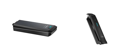
Au sein de la gamme éprouvée PowerPack (compatible notamment avec les moteurs Bosch Classic+, Active Line et Performance Line), les PowerPack 400 et PowerPack 500 sont les modèles de référence. Comme leurs dimensions extérieures sont identiques, il est possible de remplacer facilement un PowerPack 400 par un PowerPack 500 sur un vélo électrique existant.
Caractéristiques techniques
Bien que leurs boîtiers soient visuellement identiques, la différence majeure réside dans leur conception interne. Bosch utilise exactement 40 cellules lithium-ion dans les deux modèles. La différence se situe au niveau de la densité énergétique : les cellules du PowerPack 500 peuvent stocker davantage d’énergie par cellule (environ 12,5 Wh) que celles du PowerPack 400 (environ 10 Wh).
| Caractéristique technique | Bosch PowerPack 400 | Bosch PowerPack 500 |
|---|---|---|
| Énergie (Wh) | 400 Wh | 500 Wh |
| Capacité (Ah) | 11,1 Ah | 13,4 Ah |
| Tension (V) | 36 V | 36 V |
| Poids | Env. 2,5 kg | Env. 2,6 kg |
| Temps de charge (Standard Charger) | Env. 3,5 h | Env. 4,5 h |
| Autonomie (mode Eco) | 60 à 90 km | 75 à 110 km |
| Autonomie (mode Turbo) | 20 à 35 km | 25 à 45 km |
Différences ressenties dans la pratique
La disparition de l’angoisse de l’autonomie
Lors des longues sorties, les utilisateurs d’un PowerPack 400 ont tendance à surveiller plus fréquemment l’indicateur de batterie sur le guidon. Les 25 % de capacité supplémentaires du PowerPack 500 procurent un sentiment de liberté appréciable : vous savez que vous disposez toujours d’une réserve confortable.
Une puissance plus constante
À mesure qu’une batterie lithium-ion se décharge, sa tension diminue légèrement. En cas de forte sollicitation (montée raide ou vélo cargo chargé), le PowerPack 500 conserve plus longtemps une sensation de puissance et de dynamisme, car sa capacité supérieure résiste mieux aux fortes demandes d’énergie.
Aucune contrainte physique supplémentaire
Avec seulement 100 grammes d’écart entre les deux modèles, la version plus grande ne se ressent pratiquement pas lors de la conduite ou du transport du vélo. Le centre de gravité du vélo électrique reste identique.
Une meilleure endurance en hiver
Le froid réduit considérablement l’efficacité des batteries de vélos électriques, parfois jusqu’à 30 % d’autonomie en moins. Alors que le PowerPack 400 peut sembler se décharger rapidement pendant les mois d’hiver, le PowerPack 500 conserve suffisamment de performances pour assurer les trajets quotidiens dans de bonnes conditions.
Conseil de choix : quel PowerPack correspond à votre usage ?
Choisissez le Bosch PowerPack 400
Si vous utilisez votre vélo électrique principalement pour des trajets urbains courts et prévisibles, par exemple 10 à 15 kilomètres par jour pour aller au travail ou faire des courses, le PowerPack 400 est largement suffisant. Il convient également aux cyclistes économes qui pédalent activement et utilisent principalement les modes « Eco » ou « Tour » pour bénéficier d’une assistance légère.
C’est aussi l’option la plus économique : le PowerPack 400 est moins cher à l’achat. Si vous n’avez pas besoin d’une grande autonomie, vous réduisez ainsi le coût d’acquisition du vélo électrique ou de la batterie de remplacement.
Choisissez le Bosch PowerPack 500
Si vous aimez effectuer de longues balades le week-end et souhaitez éviter de rechercher constamment un point de recharge, le PowerPack 500 est le choix le plus adapté, en particulier sur des parcours variés. Dans les régions vallonnées ou exposées à des vents contraires fréquents, la version 500 Wh est fortement recommandée.
Cette batterie est également particulièrement adaptée aux vélos cargos électriques. Pour les utilisateurs qui privilégient le confort et utilisent régulièrement les modes « Sport » et « Turbo » afin d’accélérer rapidement et sans effort, la réserve d’énergie supplémentaire est très appréciable.
Le PowerPack 500 constitue également un investissement durable. Toutes les batteries perdent progressivement une partie de leur capacité au fil des années en raison du vieillissement chimique naturel. En commençant avec 500 Wh, vous conserverez encore une autonomie confortable après plusieurs années d’utilisation intensive, alors qu’une batterie de 400 Wh vieillissante risque plus rapidement de devenir limitante.
Conclusion
Le choix entre le Bosch PowerPack 400 et le Bosch PowerPack 500 dépend essentiellement de l’équilibre entre le coût d’achat initial et la flexibilité d’utilisation. Le PowerPack 400 reste une excellente solution économique pour les cyclistes qui utilisent leur vélo électrique de manière essentiellement fonctionnelle pour des trajets courts et locaux.
En revanche, ceux qui recherchent davantage de liberté lors de leurs sorties, souhaitent limiter l’impact du froid hivernal ou veulent disposer d’une réserve d’énergie confortable pour les années à venir réaliseront un investissement judicieux avec le Bosch PowerPack 500.
FAQ
Puis-je remplacer un Bosch PowerPack 400 par un PowerPack 500 ?
Oui. Les deux batteries possèdent les mêmes dimensions, le même boîtier et les mêmes connexions. Un PowerPack 500 peut donc remplacer un PowerPack 400 sans aucune modification.
Quelle est la différence d’autonomie entre un Bosch PowerPack 400 et un PowerPack 500 ?
Le PowerPack 500 offre environ 25 % de capacité supplémentaire par rapport au PowerPack 400, ce qui se traduit par une autonomie sensiblement supérieure. L’autonomie réelle dépend toutefois du style de conduite, du terrain, des conditions météorologiques et du niveau d’assistance utilisé.
Pour qui le Bosch PowerPack 500 est-il le meilleur choix ?
Le PowerPack 500 est idéal pour les longues randonnées à vélo, les terrains vallonnés, les vélos cargos électriques, l’utilisation intensive des modes Sport et Turbo, ainsi que pour les cyclistes qui souhaitent conserver une autonomie suffisante pendant l’hiver.