
Oui, les e-bikes sont résistants aux éclaboussures et conçus pour rouler sous la pluie. Évitez toutefois les flaques profondes et l’immersion prolongée.
Comment rouler en toute sécurité sous la pluie avec un vélo électrique ? Apprenez-le en 5 étapes
Faire du vélo sous la pluie : certains trouvent cela rafraîchissant, d’autres préfèrent l’éviter. Pourtant, en Belgique et aux Pays-Bas, il est presque inévitable de se retrouver tôt ou tard sous une averse. Avec un vélo électrique, ce n’est pas différent. Mais comment gérer cela de manière sûre et confortable ? Et comment rendre votre trajet plus agréable ? Dans cet article, nous vous donnons des conseils pratiques, des explications techniques et des astuces pour continuer à pédaler sereinement par tous les temps.

Un vélo électrique résiste-t-il à la pluie ?
L’une des questions les plus fréquentes est de savoir si un vélo électrique supporte la pluie. La réponse courte : oui. Les vélos électriques sont conçus pour fonctionner même par temps humide. Le moteur et la batterie sont protégés contre l’eau selon les normes internationales IP. Cela signifie que les éclaboussures ou une forte averse ne posent aucun problème.
Quelques points d’attention toutefois :
- Évitez l’immersion : votre e-bike supporte la pluie, mais pas une immersion prolongée ni les flaques profondes.
- Batterie et connexions : assurez-vous que la batterie est bien enclenchée et que les points de contact restent secs.
- Entretien : après une sortie sous la pluie, essuyez votre vélo pour éviter la rouille et l’usure.
En résumé : un vélo électrique résiste très bien à la pluie, à condition de l’utiliser correctement et de bien l’entretenir.
Conseils de sécurité pour rouler sous la pluie
La pluie influence votre visibilité, l’état de la route et le fonctionnement de votre vélo. Il est donc important d’adapter votre conduite et votre équipement.
1. Adaptez votre vitesse
La chaussée mouillée peut devenir glissante, surtout sur les passages piétons, plaques d’égout et rails de tram. Roulez donc plus lentement et anticipez les dangers.
2. Freinez avec précaution
- Utilisez les deux freins simultanément, mais en douceur.
- Gardez plus de distance avec les cyclistes devant vous, car la distance de freinage est plus longue sous la pluie.
- Privilégiez si possible un vélo électrique équipé de freins à disque hydrauliques, plus efficaces sur route mouillée.
3. Améliorez votre visibilité
La pluie réduit la visibilité, surtout au crépuscule ou la nuit.
- Utilisez un bon éclairage avant et arrière.
- Portez des vêtements ou accessoires réfléchissants.
- Une veste de pluie colorée vous protège non seulement de l’eau, mais vous rend aussi plus visible dans le trafic.
4. Soyez attentif dans les virages
Sous la pluie, l’adhérence diminue. Prenez les virages lentement et gardez le vélo le plus droit possible pour maximiser le contact des pneus avec la route.
5. Choisissez les bons pneus
Des pneus avec suffisamment de profil offrent plus de grip. Des pneus usés ou trop durs augmentent le risque de glissade. Envisagez des pneus plus larges pour plus de stabilité.
Quels accessoires facilitent le vélo sous la pluie ?
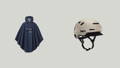
Le bon équipement fait toute la différence. Voici ce qui rend les trajets pluvieux bien plus confortables :
Vêtements de pluie
- Poncho de pluie : rapide à enfiler, idéal pour les trajets courts.
- Veste et pantalon imperméables : parfaits pour les trajets plus longs, ils gardent au sec et au chaud.
- Surchaussures : évitent que vos pieds ne soient trempés.
- Gants imperméables : gardent vos mains au chaud et améliorent la prise en main du guidon.
Protection du vélo
- Garde-boue : indispensables pour éviter les éclaboussures d’eau et de boue.
- Carrossage de chaîne ou courroie : empêche vos vêtements de se salir.
- Sacoches étanches : idéales pour transporter ordinateur, livres ou courses sans risque d’humidité.
Confort supplémentaire
- Casque avec visière : protège votre visage de la pluie et améliore la visibilité.
- Housse de selle : évite de s’asseoir sur une selle trempée après une pause.
Que faire si vous devez laisser votre e-bike sous la pluie ?
Il arrive qu’on n’ait pas d’autre choix que de garer son vélo sous une averse. Ce n’est pas grave, mais suivez ces conseils :
- Utilisez une housse de protection si le vélo reste dehors longtemps.
- Retirez la batterie si vous laissez le vélo plusieurs heures sous la pluie, pour protéger l’électronique et prolonger sa durée de vie.
- Garez-le sous un abri ou contre un mur pour limiter l’exposition.
- Essuyez le vélo après usage, surtout les parties métalliques, afin d’éviter la rouille.
Entretien après une sortie sous la pluie
Après un trajet pluvieux, un petit check-up est utile :
- Séchez le vélo avec un chiffon doux.
- Vérifiez la batterie et les contacts : séchez-les si nécessaire.
- Lubrifiez la chaîne : la pluie enlève le lubrifiant et favorise la rouille.
- Contrôlez les freins : les patins s’usent plus vite sur sol mouillé.
Avec ce petit entretien, votre vélo électrique restera en parfait état, même en automne et en hiver.
Résumé : rouler sous la pluie en sécurité et confortablement
Un vélo électrique supporte très bien la pluie, mais vous devez penser à la sécurité et au confort :
- Roulez moins vite, freinez doucement et gardez vos distances.
- Utilisez un bon éclairage, des pneus adaptés et des vêtements imperméables.
- Protégez votre vélo avec des garde-boue, des sacoches étanches et une housse si nécessaire.
- Entretenez-le après chaque trajet sous la pluie.
Ainsi, rouler sous la pluie restera non seulement sûr, mais aussi agréable.
Foire aux questions
Un vélo électrique supporte-t-il la pluie ?
Que faire si la batterie de mon e-bike est mouillée ?
La batterie est étanche, mais assurez-vous qu’elle est bien fixée. Séchez les points de contact si nécessaire.
Quels vêtements sont les plus adaptés pour rouler sous la pluie ?
Une veste et un pantalon imperméables sont idéaux. Pour les trajets courts, un poncho suffit. N’oubliez pas les surchaussures et gants.
Est-il mauvais de laisser mon vélo électrique sous la pluie ?
Non, si c’est temporaire. Utilisez toutefois une housse et retirez la batterie en cas de pluie prolongée.