
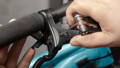
Use an Allen key to loosen the caliper, rotate the wheel, then tighten the brake lever and retighten the caliper. Check that the brake pads are not rubbing.
Mechanical or hydraulic brakes: which to choose for an electric bike?
Disc brakes have become the norm on almost all new bikes, especially electric bikes. But one question often comes up: should you opt for mechanical or hydraulic disc brakes?
In this guide, we compare the two systems so you can choose the brakes that best suit your riding style, maintenance needs and type of electric bike.
What is a disc brake?
Disc brakes are a modern alternative to rim brakes.
Instead of pinching the rim, they grip a metal rotor attached to the wheel hub.
When you press the brake lever :
- Pistons in the caliper push the brake pads against the disc
- This provides more powerful and precise braking than rim brakes.
Advantages of disc brakes :
- High braking power: essential for higher speeds and the extra weight of an electric bike
- Consistent performance in all weathers: even in the rain or mud
- Less manual effort: reduces hand fatigue during long outings

What is a mechanical brake?
Mechanical disc brakes use a steel cable to connect the lever to the braking system, similar to the old rim brakes.
Features :
- Operated by cable (often housed in a sheath)
- Well-known, easy-to-adjust system
- Common on entry-level or recreational electric bikes
Advantages :
- Less expensive to buy
- Easy to maintain yourself (no specialized tools required)
- Parts are easy to find and replace
Disadvantages :
- Less braking power than hydraulic systems
- Cable may stretch or jam due to dirt or rust
- Need more frequent maintenance
Tip: for short journeys or in town, mechanical brakes may suffice.
What is a hydraulic brake?
Hydraulic brakes use a closed system of brake fluid (such as mineral oil), instead of a cable.
When you brake :
- A piston pushes brake fluid into a hose
- Pressure actuates the caliper, which pushes the pads against the rotor
Advantages :
- Maximum braking power: essential for speed pedelecs or fatbikes
- Precise, flexible dosing
- Very low maintenance, thanks to closed system
- No cable wear or lengthening problems
Disadvantages :
- More expensive to buy
- More technical maintenance (requires tools such as a purge kit)
- More complex repairs in the event of a breakdown
When to choose mechanical or hydraulic brakes?
| Features | Mechanical brakes | Hydraulic brakes |
|---|---|---|
| How it works | By cable | Closed hydraulic system |
| Braking power | Correct but limited | Excellent, consistent |
| Maintenance | Frequent but simple | Rare but technical |
| Cost | Affordable | More expensive |
| Suitable for electric bikes? | Yes, lightweight or leisure models | Yes, especially heavy or fast models |
Hydraulic brakes on an electric bike: why it's worth it
For an electric bike, it is crucial to be able to :
- Brake quickly and safely
- Managing weight and extra speed
This is why hydraulic brakes are often the best choice, especially for :
- Speed pedelecs
- Heavy fatbikes or cargo bikes
- High-speed commuting
Can you switch from mechanical to hydraulic brakes?
Yes, it is possible to convert a bike equipped with mechanical brakes to hydraulic brakes. Here's what you need to know:
- You need a complete kit: levers, hoses, calipers, etc.
- Shimano or Tektro systems are very popular
- Assembly requires technical skills or the help of a professional
Bonus: This upgrade offers a totally different driving experience: smoother, safer, more responsive.
Hydraulic brakes: are they worth the extra cost?
✅ Yes, if you drive often or at high speed
✅ Indispensable for heavy bikes such as speed pedelecs or cargo bikes
⛔ Not required for occasional city recreational use
Conclusion: which brakes to choose?
Both types are better than rim brakes. The right choice depends on your needs:
- Mechanical disc brakes: economical, easy to maintain
- Hydraulic disc brakes: superior performance, especially on fast or heavy e-bikes
Whatever your choice, with disc brakes you're already better prepared for powerful, safe, all-weather rides.
Your most frequently asked questions
How do I adjust the hydraulic brakes on an electric bike?
How often should hydraulic brakes be topped up?
In general, once a year, or if the lever becomes spongy. Check brake fluid level regularly.
What's the best choice for an electric bike: hydraulic or mechanical brakes?
Hydraulic brakes are more powerful, constant and low-maintenance: ideal for heavy or fast e-bikes.
Can you bleed hydraulic brakes yourself?
Yes, with a purge kit and a little patience. Follow the manufacturer's instructions (Shimano, Tektro, etc.).
Are hydraulic brakes suitable for a fatbike?
Absolutely. The high weight and wide tires of a fatbike demand maximum braking power. Hydraulic brakes are perfect.
What is the disadvantage of a hydraulic brake?
They are more costly and require specific technical skills and tools for maintenance (purging, fluid change).