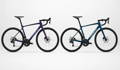
Giant Advanced 1 vs. Advanced 2

The Giant TCR Advanced line consists of three models for the 2026 model year. For most buyers, the choice comes down to the mid-range and entry-level models: the TCR Advanced 1 and the TCR Advanced 2. The price difference is obvious, but the differences in components are much smaller than many people imagine. Both bikes share the same carbon frame 

Advanced-Grade Composite, the same carbon fork, the same Giant aluminum wheels, the same performance-oriented geometry, and the same maximum tires width tires mm. The real difference comes down to a single component. For me, that’s the whole point of this comparison, and it makes the choice much simpler than the model names might suggest.

Written by: Jos Mans | May 29, 2026 | Reading time: 5minutes

About the author: Jos Mans

Jos is a writer and cyclist, most often both at the same time. With thousands of miles under his belt and just as many words on paper, he combines his two great passions: being on the move and telling stories.

Giant Advanced 1 vs. Advanced 2

Key findings

  1. For the 2026 model year, the Advanced 1 and Advanced 2 share the same frame, fork, and wheelset.
  2. The main difference lies in the drivetrain: Shimano 105 Di2 electronic versus Shimano 105 mechanical.
  3. When buying a refurbished bike, the bike’s actual condition is often more important than its model number.

TCR Advanced 1 and TCR Advanced 2: Features

ComponentTCR Advanced 1TCR Advanced 2
FrameAdvanced-Grade Carbon CompositeAdvanced-Grade Carbon Composite
ForkAdvanced-Grade Composite, OverDriveAdvanced-Grade Composite, OverDrive
TransmissionShimano 105 Di2 (electronic)Shimano 105 (mechanical)
Speeds12 speeds12 speeds
CassetteShimano 105, 11-34Shimano 105, 11-34
PedalsShimano 105, 52/36Shimano 105, 52/36
BrakesShimano 105 Di2 HydraulicShimano 105 hydraulic brakes
Records160 mm front / 140 mm rear160 mm front / 140 mm rear
WheelsGiant Disc Aluminum, 30 mmGiant Disc Aluminum, 30 mm
tiresGiant Course 0 Tubeless, 700x28cGiant Course 0 Tubeless, 700x28c
Maximum width of the tires33 mm33 mm
SizesS, M, M/L, L, XLS, M, M/L, L, XL
Available as refurbishedLimited, generally in the high-end segmentMore widely available

What Advanced 1 and Advanced 2 have in common

It’s helpful to start by looking at what these two bikes have in common. Giant both models around the same Advanced-Grade Composite frame and the same full-carbon OverDrive fork. The geometry is identical: sporty and race-oriented, with precise and responsive handling.

Both models are equipped with 30mm-high Giant aluminum wheels, fitted with 28mm Giant Course 0 tires . The maximum 33mm tire clearance is generous for a road bike in this category and allows for tires to be fitted for added comfort.

The braking system is also identical: Shimano 105 hydraulic disc brakes with a 160 mm rotor up front and a 140 mm rotor in the rear. Both bikes use an 11-34 cassette and a 52/36 crankset. If you compare just the frame and wheels, they’re practically the same bike.

Shimano 105 Di2 vs. Shimano 105 Mechanical

The difference between the two versions comes down to their transmission systems.
The TCR Advanced 1 is equipped with Shimano 105 Di2, Shimano’s electronic drivetrain. The TCR Advanced 2 uses the mechanical version of the same groupset. Both systems are 12-speed and share many components, but their operation is noticeably different.

With Di2, gear shifting is controlled by electronic shifters. A single press is all it takes to change gears. The shifting remains consistent because there are no cables that can stretch, get dirty, or require adjustment.

The mechanical version works in the traditional way: moving the shifter activates a cable that shifts the derailleur. The system is proven and effective, but it requires more maintenance. The cables need to be replaced periodically, and their tension must be kept properly adjusted. In mud or rain, shifting can also become slightly less smooth.

In practice, Di2 doesn’t make the bike faster, but it does make it easier to ride. Shifting becomes more intuitive, especially before a turn or when climbing under load. Whether the extra cost is worth it therefore depends more on the rider’s profile than on the bike itself.

Driving experience: Can you really tell the difference?

On the road, both versions of the TCR handle almost identically. That makes sense: it’s the frame, above all, that determines how the bike handles.

The TCR is a sporty, lightweight, and responsive road bike. Its geometry is designed for speed, featuring a relatively low riding position, precise steering, and sharp acceleration. It’s a bike that’s particularly well-suited for climbs, fast group rides, and performance-oriented cyclosportives.

On the Advanced 1, the difference is most noticeable in the shifting. Gear changes disrupt your pedaling rhythm less. This advantage is subtle, but becomes noticeable on long rides.

On the Advanced 2, shifting gears requires a bit more attention, especially when accelerating from a stop or making quick gear changes before a short climb. The difference isn’t huge, but it is noticeable.

In terms of comfort, vibration damping, or front-end handling, there is virtually no difference. Both bikes take full advantage tires and can accommodate tires 33mm for added comfort on rough roads.


Buying a refurbished model refurbished key points to check

When buying a refurbished bike, the situation is completely different. It’s no longer the model number that determines the bike’s value, but its actual condition. A well-maintained Advanced 2 can be a better buy than a neglected Advanced 1.

For both models, the same basic checks are required:

  • Carefully inspect the carbon frame around the head tube, bottom bracket, chainstays, and seatpost.
  • Small chips in the paint are normal, but cracks, white stress lines, or soft spots are not.
  • Check that the transmission shifts through all gears smoothly under load.
  • Check the chain, cassette, and chainrings for wear.
  • Check the spoke tension and any play in the bearings.
  • Check the condition of the brake pads and rotors.

For a model equipped with Di2, you will also need:

  • Check the battery status.
  • Make sure the charger is included.
  • Check that both derailleurs are working properly.

For the mechanical version, it is a good idea to ask whether the cables have been replaced recently and whether the tension is still properly adjusted.
In my opinion, a well-maintained TCR Advanced 2 with a recently replaced drivetrain is often the most sensible choice on the refurbished market, unless an Advanced 1 in comparable condition is available for only a small additional cost.

FAQ

What is the main difference between the Giant Advanced 1 and the 2?

The main difference lies in the drivetrain. The Advanced 1 is equipped with the Shimano 105 Di2 electronic groupset, while the Advanced 2 uses the Shimano 105 mechanical groupset. The frame, fork, wheels, and brakes are identical for the 2026 model year.

Do both bikes use the same frame?

Yes. Both models feature the same Giant Composite carbon frame, the same geometry, and the same full-carbon OverDrive fork.

Is the Shimano 105 Di2 worth the extra cost?

It depends on how you ride. Regular cyclists who shift gears frequently will appreciate the comfort of Di2. For more casual riding, the mechanical Shimano 105 is more than adequate.

Which model is best for a beginner?

For most beginners, the TCR Advanced 2 is the most logical choice. It features the same frame and wheels as the Advanced 1, but with a drivetrain that’s easier to understand and maintain. The money you save can be invested later in a better set of wheels.

What should you look out for when buying a refurbished TCR Advanced refurbished

Inspect the carbon frame for cracks or signs of stress, measure the wear on the chain and cassette, and check the brakes and spoke tension. On a Di2 model, also check the battery, the charger, and make sure the derailleurs are working properly.

Do you still have questions?

Contact us by email: support@upway.shop