
Pourquoi les fatbikes sont dangereuses?
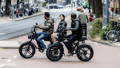
On les voit partout en ville : des fatbikes avec leur look robuste et leurs pneus extra larges. Elles ressemblent à de petits monstres, très populaires surtout chez les jeunes qui veulent geen scooter. Mais derrière cette allure cool se cache une réalité moins agréable. Les fatbikes sont plus souvent impliquées dans des accidents que les e-bikes classiques – et les raisons sont surtout techniques.
Écrit par : Hanna Stevens | 14 november 2025 | Temps de lecture : 4 minutes

En savoir plus sur l’auteure : Hanna Stevens
Hanna est une passionnée de vélo qui adore explorer de nouveaux itinéraires et partager ses expériences pour inspirer les autres à enfourcher leur bicyclette plus souvent.
Principales conclusions
- Leur poids de 30–35 kg allonge la distance de freinage
- Le couple de 40–80 Nm provoque des accélérations difficiles à maîtriser
- Les pneus 4 pouces manquent d’adhérence sur sol mouillé et à haute vitesse
- Beaucoup de modèles peuvent être débridés à 35–45 km/h
- Freins et éclairage souvent insuffisants sur les modèles bon marché
- Très populaires chez les jeunes, peu expérimentés en circulation
Table des matières
Le problème du poids : pourquoi freiner devient plus difficile
Cette accélération brutale : quand le moteur réagit trop vite
Les pneus larges : parfaits dans le sable, moins en ville
Le problème du débridage : plus rapide que ce que la loi autorise
Freins et éclairage : des détails qui comptent
Jeunes et milieu urbain : une combinaison risquée
Comment faire un choix plus sûr ?
Le problème du poids : pourquoi freiner devient plus difficile
- Distance de freinage plus longue, surtout sur sol mouillé
- Plus d’effort pour tourner ou éviter un obstacle
- Réactions plus lentes en cas d’imprévu
- Contrôle difficile à basse vitesse
Cette accélération brutale : quand le moteur réagit trop vite
- Accélération brusque au démarrage
- Difficulté à doser en virage
- Nécessité d’anticiper en permanence
- Peu de progressivité dans l’assistance
Les pneus larges : parfaits dans le sable, moins en ville
- Direction moins réactive lors de corrections rapides
- Glissades possibles dans les virages sur sol mouillé
- Instabilité sur rails de tram ou plaques métalliques
- Pression basse (0,5–1 bar) qui déforme le pneu en virage
Le problème du débridage : plus rapide que ce que la loi autorise
- Freins non conçus pour dépasser 30 km/h
- Pneus instables à haute vitesse
- Pas d’obligation de casque, assurance ou plaque
- Les automobilistes ne s’attendent pas à une « vélo » roulant à vitesse de cyclomoteur
- Risque de saisie et d’amende
Les exigences légales : ce qui est autorisé ou non
| Type de vélo | Puissance max | Vitesse max | Casque | Assurance | Plaque |
|---|---|---|---|---|---|
| Vélo électrique | 250 W | 25 km/h | Non | Non | Non |
| Speed-pedelec | 500–4000 W | 45 km/h | Oui | Oui | Oui |
| Fatbike débridée (illégale) | Variable | 35–45 km/h | Le plus souvent non | Non | Non |
Freins et éclairage : des détails qui comptent
- Freins à disque mécaniques : moins chers, moins puissants, demandent plus d’entretien
- Freins hydrauliques : plus puissants, plus fiables, meilleur contrôle pour un vélo lourd
Jeunes et milieu urbain : une combinaison risquée
- Peu d’expérience dans la circulation
- Mauvaise estimation des distances d’arrêt
- Rouler en groupe, distractions
- Réflexes insuffisants face aux accélérations soudaines
- Comportement parfois trop confiant
Comment faire un choix plus sûr ?
- Freins à disque hydrauliques
- Marquage CE (conformité européenne)
- Éclairage avant/arrière conforme à la norme
- Batterie testée avec rapport de capacité
- Cadre stable sans défauts de soudure
- Moteur de 250 W nominal (conforme)
- Poids : maks. 30–32 kg
- Batterie : 480–720 Wh (testée)
- Couple moteur : 40–60 Nm (suffisant pour la ville)
- Pneus : pression réglée entre 0,8–1,2 bar
Comparaison : fatbike vs e-bike urbain
| Caractéristique | Fatbike | E-bike urbain |
|---|---|---|
| Poids | 30–35 kg | 22–26 kg |
| Largeur des pneus | 4,0–4,8" | 37–50 mm |
| Couple moteur | 40–80 Nm | 35–65 Nm |
| Freinage (mouillé) | Plus long | Plus court |
| Réactivité de la direction | Plus lente | Plus vive |
| Usage idéal | Off-road, loisirs | Trajets quotidiens |
| Risque de débridage | Élevé | Faible |
Comment réduire les risques
- Choisir des freins hydrauliques et un bon éclairage
- Vérifier la conformité CE et une batterie testée
- Ne pas dépasser 25 km/h (limite légale)
- Envisager un modèle reconditionné et contrôlé
- Permettre aux débutants de s’exercer dans un endroit calme