
En moyenne tous les 3 000 à 6 000 km, selon le type de pneu et votre style de conduite.
Remplacer un pneu de vélo électrique : étape par étape
Une crevaison est toujours ennuyeuse, et oui, même les vélos électriques y sont confrontés tôt ou tard. Comme un e-bike est plus lourd et contient plus de technologie qu’un vélo classique, changer un pneu peut sembler compliqué. Mais bonne nouvelle : avec un peu de préparation et les bons outils, vous pouvez parfaitement le faire vous-même.
Dans ce guide, nous vous expliquons pas à pas comment remplacer le pneu de votre vélo électrique, et nous partageons des conseils pratiques pour choisir le type de pneu le mieux adapté à votre style de conduite.
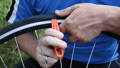
Pourquoi les pneus d’un e-bike s’usent-ils plus vite ?
Les vélos électriques sont plus lourds que les vélos classiques, surtout à cause du moteur et de la batterie. Cela exerce une pression supplémentaire sur les pneus. De plus, beaucoup de cyclistes en e-bike roulent plus vite et parcourent de plus longues distances. Résultat :
- Le caoutchouc s’use plus rapidement
- Vous avez plus de risques de crevaison
- Les irrégularités comme les bordures et les dos-d’âne sollicitent davantage le pneu
Vous voulez continuer à rouler en toute sécurité et confort ? Alors pensez à remplacer vos pneus à temps.
De quoi avez-vous besoin ?
Avant de commencer, préparez tout le matériel nécessaire. Vous éviterez ainsi les frustrations en cours de route.
- Démonte-pneus
- Pneu et chambre à air neufs (ou matériel tubeless)
- Pompe à vélo (de préférence avec manomètre)
- Clé plate ou clé Allen (pour les axes ou fixations moteur)
- Gants (pratiques pour éviter de se salir les mains)
Remplacer un pneu en 6 étapes simples
Étape 1 : Préparation
- Placez votre vélo bien droit, idéalement sur une béquille.
- Retirez la batterie : cela évite les dommages et allège le vélo.
- Passez la vitesse sur le plus petit pignon arrière. La roue sortira plus facilement.
Étape 2 : Retirer la roue
Cela dépend du type de moteur :
- Roue avant : généralement simple, il suffit de desserrer les écrous ou le levier de serrage rapide.
- Roue arrière (moteur central) : retirez la chaîne du plus petit pignon et tirez légèrement le dérailleur sur le côté.
- Roue arrière (moteur dans le moyeu) : débranchez délicatement le câble du moteur. Tirez toujours sur la fiche, jamais sur le câble.
Astuce : prenez une photo des câbles avant de les débrancher. Vous saurez exactement comment tout reconnecter.
Étape 3 : Retirer l’ancien pneu
- Dégonflez complètement le pneu.
- Utilisez les démonte-pneus pour dégager un côté du pneu de la jante.
- Retirez la chambre à air.
- Vérifiez l’intérieur du pneu pour détecter du verre, des cailloux ou des clous.
Étape 4 : Monter le nouveau pneu
- Placez un côté du pneu sur la jante.
- Insérez la chambre à air en commençant par la valve.
- Gonflez légèrement la chambre à air pour qu’elle se place bien.
- Remettez ensuite l’autre côté du pneu dans la jante. Si c’est trop serré, utilisez les démonte-pneus mais avec précaution pour ne pas percer la chambre.
Étape 5 : Remettre la roue en place
- Replacez la roue dans la fourche ou le cadre arrière.
- Vérifiez que la chaîne est bien positionnée.
- Rebranchez le câble moteur si vous avez un moteur dans le moyeu.
- Serrez bien les écrous ou le levier de serrage rapide.
Étape 6 : Gonfler et vérifier

- Gonflez le pneu à la bonne pression (indiquée sur le flanc du pneu).
- Vérifiez que le pneu est bien droit et qu’il ne frotte nulle part.
- Faites tourner la roue : si tout est fluide, c’est terminé !
Quels pneus conviennent aux e-bikes ?
Tous les pneus de vélo ne sont pas adaptés à un e-bike. Ces vélos nécessitent des pneus plus robustes, avec plus d’adhérence et une meilleure protection anti-crevaison.
1. Chambre à air + pneu
- La solution classique : facile à remplacer et relativement économique.
- Un peu plus sensible aux crevaisons que les variantes tubeless.
2. Pneus tubeless
- Pas de chambre à air, mais du liquide préventif qui colmate les petites crevaisons.
- Avantages : moins de crevaisons, plus de confort, moins de résistance au roulement.
- Inconvénient : un peu plus difficile à installer, nécessite des jantes compatibles « tubeless ready ».
3. Pneus anti-crevaison
- Avec une couche supplémentaire de caoutchouc ou de kevlar.
- Idéal pour un usage quotidien et les longs trajets.
- Un peu plus lourds, mais beaucoup plus fiables.
Largeur des pneus : large ou étroit ?
La largeur influence le confort, la vitesse et l’adhérence. Voici un aperçu :
| Largeur de pneu | Avantages | Idéal pour |
|---|---|---|
| Large (47–60 mm) | Confortable, beaucoup d’adhérence | Ville, trekking, temps pluvieux |
| Étroit (28–40 mm) | Léger, efficace | Cyclistes sportifs, asphalte lisse |
Astuce : pour la plupart des vélos de ville électriques, une largeur d’environ 47 mm est un bon compromis.
Marques populaires de pneus pour e-bikes
Schwalbe
- Energizer Plus : spécialement conçu pour e-bikes, excellente protection anti-crevaison.
- Marathon E-Plus : durable et fiable, apprécié des navetteurs.
- Smart Sam : profil large, parfait aussi pour le tout-terrain.
Continental
- Contact Plus : robuste et résistant aux crevaisons.
- Ride City E : abordable et idéal pour la ville.
Michelin
- E-Wild : pour les e-VTT sportifs.
- Protek Max : pneu urbain fiable avec bonne protection anti-crevaison.
Conseils supplémentaires pour plus de plaisir à vélo
- Utilisez toujours des pneus spécialement conçus pour les e-bikes.
- Vérifiez régulièrement la pression de vos pneus. Des pneus trop mous s’usent plus vite et consomment plus de batterie.
- Vous roulez souvent en tout-terrain ? Envisagez un montage tubeless.
- Votre roue a du voile ? Faites-la dévoiler chez un vélociste.
Conclusion
Changer un pneu sur un vélo électrique est peut-être un peu plus complexe que sur un vélo classique, surtout à cause du moteur et des câbles, mais c’est loin d’être impossible. Avec la bonne méthode et un peu de patience, vous pouvez le faire vous-même. Ensuite, choisissez un bon pneu adapté à votre usage – par exemple chez Schwalbe, Continental ou Michelin – et vous roulerez de nouveau en toute sécurité et confort.
Foire aux questions
À quelle fréquence faut-il remplacer les pneus d’un e-bike ?
Puis-je utiliser des pneus classiques sur mon e-bike ?
Techniquement oui, mais les pneus e-bike sont plus solides et plus sûrs. Fortement recommandés.
Combien coûte le remplacement d’un pneu chez le vélociste ?
Entre 25 € et 50 €, selon le type de vélo et la présence d’un moteur dans le moyeu.
Quelle est la pression idéale pour un pneu de vélo électrique ?
Généralement entre 3,5 et 5 bars. Pour les pneus larges (fatbikes), la pression est plus basse. Vérifiez toujours le flanc de votre pneu.