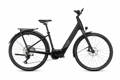
Kathmandu e-bike cube test: which type is right for you?

The Kathmandu Cube is not a single model, it's a family. And within this family, there is a big difference: on the one hand, a sturdy trekking e-bike with a Bosch CX motor and large battery, capable of accompanying you effortlessly throughout the winter; on the other, a lightweight carbon Kathmandu that can still be lifted onto a luggage rack, but with a very different feeling of power.


When Upway offers them in several sizes and configurations, vague advice is useless. So here is the practical guide I wish I had had myself: the types, their typical strengths, known irritations, and pitfalls to avoid.

Written by: Jos Mans | January 26, 2025 | Reading time: 5minutes

About the author: Jos Mans

Jos is a writer and cyclist, most often both at the same time. With thousands of miles under his belt and just as many words on paper, he combines his two great passions: being on the move and telling stories.

Kathmandu cube

Key findings

  1. Most Kathmandu bikes are fully equipped trekking e-bikes (mudguards, luggage rack, lights), but they are also structurally heavy: excellent on the road, but less pleasant to lift.
  2. The Comfort range (belt + Enviolo) is the "always relevant" choice if you want to ride without worries and without tinkering.
  3. The C:62 400X is an exception: much lighter and livelier, but with a different motor/battery combination than the CX models.

User experience: why people choose Kathmandu

I recently spoke with Florien (41, Amersfoort). A pseudonym, but a very recognizable situation: two children, a 17-kilometer commute, and no desire to spend her weekends fixing a bike. She chose a Kathmandu for one simple reason: peace of mind. Not having to worry about range. No doubting that the bike will "do the job" when it rains. Just get on and go.

This is precisely where the Kathmandu excels. A trekking approach. tires . Comfort for your hands and back. A bike that doesn't rush you, but accompanies you. Even at low speeds, it remains stable. Yes, it sounds like marketing talk, but in practice, it's simply enjoyable.

His biggest irritation, however, was not listed on the technical specifications: the weight. "In the garage, it's like a tank." And that's the point I always emphasize with this series: classic Kathmandus often ride better than you'd think, but lift less well than you'd hope. Bike racks, small steps, narrow hallways: suddenly, the conversation changes. Add to that the fact that the Bosch battery is heavy and doesn't always have a convenient handle for removing it.

There is also the luggage rack system. Cube's integrated luggage rack is a signature feature of the Kathmandu: sleek and sturdy. But it's also a specific system. With some panniers and baskets, everything works perfectly; with others, you have to think about compatibility. This kind of detail doesn't make the bike bad, but it's exactly the kind of information you want to know before you go on your first ride.

Critical context: finishing touches, marketing, and the real difference between CX and SX

On paper, Cube simplifies things with its versions: ONE, Pro, EXC, SLX, SLT. A bit like car trim levels. You start with the same base and move up the range: better brakes, a more refined cockpit, a general feeling that "everything is in its place." Personally, I appreciate this logic.

The problem is that in stores and online, model years and battery capacities are mixed together, giving the impression that "the Kathmandu" is one and the same bike. This is not the case. The real dividing line is not between Pro and SLX, but between CX and SX.

Most Kathmandu bikes we see are equipped with the Bosch Performance Line CX. This is the motor for those who like to have a little extra help when riding into the wind, on bridges, with luggage, an extra bag, or after a bad night's sleep: it compensates for everything. You expend less effort, which makes it very attractive for commuting and traveling.

The C:62 400X models use Bosch SX. A different promise. A lighter system. A sportier feel. Less of a "trailer" effect. Personally, I find it more honest in terms of pedaling feel, but you have to want it.
 If, for you, "Kathmandu" means "going away for the weekend with full panniers without ever feeling like you're lacking power," then the CX is the logical choice.
 If "Kathmandu" means "a practical trekking bike, but I don't want heavy e-bikes anymore," then the SX becomes a very mature and coherent option.

And then there's the reality of the industry: marketing sometimes gives the impression that a simple different sticker corresponds to "a new generation." In practice, a lot of things change through software, settings, and component choices. That's also why refurbished bikes refurbished a good option if you just want to ride: the key performance features are the same, plus you get a layer of control before the bike arrives at your door. That's a very real advantage.

Practical guide: types of Kathmandu and my advice for each one

Kathmandu Hybrid ONE – the pragmatic choice

The ONE is the solid foundation of the family. A complete trekking setup, designed for riding, not debating. Choose the ONE if you're looking for value for money above all else and don't care about a luxurious display or the ultimate finish.

My advice: choose the ONE if you ride long distances, want to keep your budget under control, and are looking for a stable bike for commuting and trekking.

Pro / EXC / SLX / SLT – same base, better finish

Here, you are purchasing refinement: braking feel, gear shifting precision, cockpit, finishes. This is the option for those who want a little more from their e-bike. If, after three weeks, you already think that the brakes could be more responsive, the gear shifting more precise, or the display more readable, then a higher-end version is right for you.

My advice: choose Pro or EXC if you want a reliable, consistent, and well-balanced package.

Kathmandu Hybrid Comfort – belt drive + Enviolo for those who dislike constraints

This is my standard recommendation for many Upway buyers. Comfort versions often combine a Gates belt with an Enviolo hub. The result: less cleaning, less adjustment, and a very relaxed riding experience. Not sporty in the strict sense, but comfortable and predictable.

Compromise: if you like direct gear changes and a sportier feel, a derailleur version will often feel livelier.

My advice: choose the Comfort if you ride to work or go on long rides and maintenance is something you'd rather not think about.

Kathmandu Hybrid C:62 400X – the lightweight Kathmandu, with different expectations

The C:62 400X is for those who are tired of heavy bikes. Carbon frame, Bosch SX, and a more compact battery. The result: a bike that no longer feels like a tank. Practical on a bike rack. Practical in a garage. Practical if you'd rather save your back for something other than moving an e-bike.

My advice: choose the C:62 400X if maneuverability and lightness are at the top of your list of priorities.

Mini checklist

  • Carrying situations: Do you often have to lift your bike onto a step or bike rack? In that case, the weight counts twice.
  • Transmission: chain = classic and direct; belt = slower maintenance cycle.
  • Engine expectations: CX for power and luggage space, SX for lightness and dynamism.

Verdict

If you force me to recommend just one type of Kathmandu, I would say the Comfort version. Not because it's the most exciting, but because it demands the least in return in real life. You ride it, you store it, and that's it: no hassle.

That said, don't underestimate the weight of classic Kathmandus. These are true trekking e-bikes, not lightweight motorized city bikes. And if you know you'll often need to lift your bike or use a bike rack, the C:62 400X isn't a luxury, but a logical choice. Don't just buy "a Kathmandu." Buy the right Kathmandu. You'll save yourself a lot of frustration.

FAQ

Why are there so many types of Cube Kathmandu e-bikes?

Because "Kathmandu" is a platform name: the same trekking base, but with different objectives. ONE and Pro/SLX are classic trekking variants (often with Bosch CX and larger batteries). Comfort focuses on the belt, Enviolo, and ease of use. C:62 400X is the lightweight carbon line with Bosch SX and a more compact battery.

Is the Kathmandu Cube heavy?

Generally, yes. Classic Kathmandu bikes are very well-equipped trekking bikes with racks, suspension, and often large batteries. This provides a stable ride, but they are heavier to carry than city bikes. The exception is the C:62 400X, which is designed to be much lighter for everyday use.

What is the advantage of the Comfort version with belt?

Quiet and low maintenance. A belt does not require lubricant, needs cleaning less often, and stays "tight" longer. Combined with the Enviolo, it offers smooth and continuous pedaling. Less sporty than a derailleur, but ideal if you just want to ride.

What is the difference between Bosch CX and Bosch SX in the Kathmandu range?

The CX gives a feeling of extra power: ideal when facing headwinds, on bridges, and with luggage. The SX is lighter and more responsive, with a sportier character, but a different approach to range and power. Choose the CX for strength; the SX for lightness and dynamism.

Do you still have questions?

Contact us by email: support@upway.shop