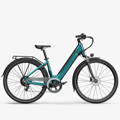
Fiido C11 Review

The market for affordable urban e-bikes is booming, and the Fiido C11 is a prime example: a direct-to-consumer e-bike that, on paper, promises a wealth of features at a relatively modest price. Hydraulic disc brakes, a removable 499.2 Wh battery, a low-step frame, and a 250 W rear motor delivering 55 Nm of torque. However, within this same lineup, one model deserves special attention: the C11 Pro. The difference lies in a component that can truly transform the riding experience, and it is this point in particular that we will examine.

Written by: Jos Mans | June 12, 2026 | Reading time: 5minutes

About the author: Jos Mans

Jos is a writer and cyclist, most often both at the same time. With thousands of miles under his belt and just as many words on paper, he combines his two great passions: being on the move and telling stories.

Giant Advanced 1 vs. Advanced 2

Key findings

  1. The standard C11 does not have a torque sensor; the C11 Pro does. This is the most significant practical difference between the two models.
  2. Both bikes weigh 24.5 kg, including the battery. That’s quite a bit of weight for those who often have to carry their bike or store it in a small space.
  3. The advertised range (90 km for the C11, 104 km for the Pro) is a theoretical maximum, not a guarantee: terrain, wind, and the level of pedal assistance can significantly reduce this distance.

Fiido C11 vs. C11 Pro


AspectAluminum road bikeCarbon road bike
Nature of the noiseGenerally mechanical: loose screws, bearings, corrosionOften related to installation, sometimes a sign of damage
Common issues with the frameCracks in welds, corrosion, material fatigueDelamination, impact damage, hidden damage
Visibility of damageCracks and dents are often visibleDamage isn't always visible to the naked eye
Sensitivity to installationMore tolerant of torque variationsTorque wrench and carbon assembly paste are essential
After a fallA visual inspection is usually sufficientA thorough inspection is strongly recommended
Risks associated with a refurbished bicycleCheck for corrosion and weldsEven stricter oversight is needed

What you get for your money

The Fiido C11 is fully equipped as a city bike. It comes with fenders, a rack, a kickstand, a frame lock, and a chain guard, as well as hydraulic disc brakes—a feature still rare in this price range. The removable 499.2 Wh battery can be recharged indoors without having to carry the entire bike, while the suspension fork combined with wide tires significantly improves comfort on cobblestones and rough surfaces.

I find this package particularly impressive given the price, but the specs never tell the whole story. A 55 Nm rear motor sounds powerful, and on paper, that figure even exceeds that of many Bosch or Shimano mid-drive motors. In practice, however, these values aren’t directly comparable: a mid-drive motor uses the bike’s drivetrain and delivers power more naturally, while a rear motor acts directly on the rear wheel.

The weight of 24.5 kg is often underestimated by buyers. On flat ground in urban areas, you hardly notice it. However, if you have to carry the bike up stairs every day or load it onto a bike rack, you’ll immediately feel the weight. So if you’re torn between the Fiido and a lighter alternative, it’s worth comparing the models carefully.

Driving experience, comfort, and city driving

The C11 was clearly designed with comfort in mind rather than performance. The riding position is upright, the low-step frame makes it easy to get on and off at every stop, and the combination of the suspension and tires effectively absorbs road bumps.

This bike is ideal for daily commutes of 5 to 25 kilometers, running errands, and leisurely rides on bike paths or paved roads.

The rack is rated for a maximum load of 25 kg, which is sufficient for a professional bag or a few pieces of light luggage, but not enough to replace a cargo bike or a longtail bike. If you regularly transport children or heavy loads, it’s best to opt for a sturdier model.

On bridges, viaducts, and gently rolling terrain, the 55 Nm motor paired with a seven-speed drivetrain provides more than enough power. For long, steep climbs or vacations in mountainous regions, however, a Bosch, Shimano, Yamaha, or Brose mid-drive motor is a more suitable option.
The low-step frame is often mistakenly thought of as a solution reserved for seniors. This is a misconception. Commuters, parents carrying heavy loads, people with back problems, and anyone who frequently rides in city traffic also find it to be a real advantage. It’s an ergonomic choice, not a matter of age.

refurbished new the real question

The most interesting question about the Fiido C11 isn't whether it's a good bike, but what you're comparing it to.

For the price of a new entry-level e-bike, you can sometimes buy a refurbished model refurbished well-known brand such as Gazelle, Batavus, Cube, Trek, or Kalkhoff, equipped with a mid-drive motor, backed by an established distribution network, and offering better resale value.
This is no small matter: when buying a used model from a brand that sells directly to consumers, such as Fiido, you need to pay close attention to the condition of the battery, the components, and the maintenance history.

A refurbished bike refurbished already undergone a second round of quality control before reaching its new owner: wear-and-tear parts are inspected, the software is updated, and the battery’s health is assessed. With a new budget bike, the first real test is often the one conducted by the buyer themselves.

When purchasing a used Fiido, it is particularly important to check the remaining battery capacity, ensure there are no engine error codes, and verify that the braking system is working properly.
Those who are still in the research phase will find additional comparisons on this blog between budget models and refurbished bikes from major brands, allowing them to evaluate these alternatives more effectively.

FAQ

Does the Fiido C11 have a torque sensor?

No, the standard C11 uses a cadence sensor. The C11 Pro is equipped with a Mivice torque sensor, which makes the pedal assist feel more natural and responsive. That is the main difference between the two versions.

What is the battery life of the Fiido C11?

Fiido claims a range of up to 90 km for the C11 and up to 104 km for the C11 Pro. In practice, these figures are often lower: the level of assistance, terrain, wind, temperature, the rider’s weight, and tires pressure all tires the actual range.

How much does the Fiido C11 weigh?

The bike weighs 24.5 kg with the battery and about 21 kg without it. This weight is acceptable for urban use on flat terrain, but it can be a hassle if you regularly have to carry or store the bike in a tight space.

refurbished a refurbished electric bike better than a new Fiido C11 new

Not always, but it’s often worth considering. A refurbished bike refurbished major brand, equipped with a mid-drive motor, higher-quality components, and a certified battery, may prove to be a better value in the long run than a new bike—especially if you plan to use it heavily for several years.

Do you still have questions?

Contact us by email: support@upway.shop