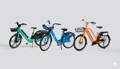
The guide to bike-sharing in Belgium: Blue-bike vs Donkey Republic vs Hoppy

Belgium is increasingly focusing on shared mobility as a complement to public transport. Whether you're commuting to work, going on an outing, or simply need to get from point A to point B quickly, there's almost always a bike available. However, the landscape remains fragmented, with different operators each applying their own rules, locations, and pricing structures. In this guide, we take a closer look at the three major players: the reliable Blue-bike, the flexible Donkey Republic, and the electric challenger Hoppy.

Written by: Hanna Stevens | December 30, 2025 | Reading time: 5 minutes

More about the author: Hanna Stevens


Hanna is an avid cyclist who loves exploring new routes and sharing her experiences to inspire others to get on their bikes more often.

compare shared bikes

Key findings

  1. Blue-bike is the most reliable choice for commuters, thanks to its nationwide coverage, low daily cost, and the guarantee of a bike for the return journey.
  2. Donkey Republic offers the greatest flexibility for A-to-B travel, ideal for regional trips and urban use without the obligation to return to the starting point.
  3. Hoppy is strong locally and attractive in terms of electricity, especially in the cities where it operates, with low rates and convenient pause options.

1. Blue-bike

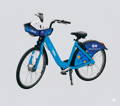
blue bike

Blue-bike is a pioneer in Belgium, founded in 2011, and focuses specifically on the "last mile": the final leg of your journey after the train, tram, or bus.

The concept: back-to-one

The main feature of Blue-bike is the Back-to-One system. You borrow a bike from a specific location and must return it to the same place. This makes it an ideal solution for commuters who arrive at the station in the morning, cycle to work, and return the bike in the evening before taking the train home.

Locations and availability

  • Blue-bike has extensive coverage with more than 200 locations throughout Belgium.
  • Bicycles are mainly located near train stations, tram and bus stops, as well as in Park & Ride parking lots.
  • More than 3,500 bicycles are available.
  • Bikes are available 24/7 (except at Brussels-North, where hours are limited).

Bicycle specifications

Blue-bike offers sturdy city bikes equipped with a practical basket. Recently, the range has been expanded to include electric bikes, which increase the range. A unique advantage is the Ethias breakdown assistance, which is automatically included in the subscription: if you have a problem, you are guaranteed to receive help.

How does it work?

In the past, Blue-bike worked exclusively with a physical card or a MoBIB card. Today, the system has been modernized:

  • Application or card: you can choose between a physical card or the new application, which makes the card unnecessary.
  • Key terminal: at many locations, you scan your card or app on a terminal, which then releases a physical key that unlocks the bike's anti-theft device.
  • Rental period: you rent the bike for the desired duration and are sure to have "your" bike for the return trip, since you keep the key.

Rates

  • Without a subscription (ticket): pay per trip, approximately $2 per 30 minutes for a standard bike and $4 per 30 minutes for an electric bike, with a maximum of approximately $6 (bike) or $12 (e-bike) per trip.
  • With membership: €12 per year or €2 per month, with reduced rates per trip and a maximum charge of approximately €3.50 per 24 hours for a standard bike and €7 for an e-bike.
  • Unlimited use (Member Plus): fixed monthly fee of €35/month (standard bike) or €70/month (standard bike + e-bike), with unlimited trips of up to 12 hours per trip.

Benefits

  • Security: you always have a bike for the return trip (since you keep it).
  • Present in most SNCB stations.
  • Roadside assistance: free assistance included via Ethias.

Disadvantages

Limited flexibility: you must return to the starting point. A one-way trip from station A to station B is not possible without high costs or logistical complications.

2. Donkey Republic

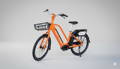
donkey electric bike

The distinctive orange bikes from Donkey Republic, originally from Denmark, are becoming increasingly visible in the urban landscape, particularly in areas such as Antwerp, Mechelen, and Waasland.

The concept: back-to-many

Unlike Blue-bike, Donkey Republic operates on a back-to-many system. You borrow a bike from one location (a hub) and can drop it off at any other official return point. This allows you to travel from village to village or from a train station to a city center without having to return to your starting point.

Locations

Donkey Republic often collaborates with cities and municipalities.

  • Regions: strong presence in the transport regions of Mechelen, Antwerp, Ghent, and Kortrijk. Specific municipalities such as Kontich and Heist-op-den-Berg have extensive networks.
  • International: a single account allows you to use bikes in more than 60 cities across Europe

Features

  • Types: classic city bikes and electric bikes.
  • Technology: the bikes are equipped with an electronic lock that works via Bluetooth on a smartphone. No key is required.

Rates

Prices may vary depending on the city, but sources provide clear indications (based on Mechelen and Kontich):

  • Individual trip (up to 30 min): Standard bike: €1.80. Electric bike: €3.00.
  • Daily pass (24 hours): Standard bike: €7. Electric bike: €10.
  • Subscriptions: for regular users, monthly or annual subscriptions (e.g., $72/month or $600/year for up to 40 trips/month).
  • Discounts: student discounts available (25%) and promotional codes for new users.

Benefits

  • One-way trips: option to leave the bike at another hub (e.g., from Beveren to Wuustwezel).
  • Simplicity via the app: everything is done via smartphone and Bluetooth.
  • Choice: electric and non-electric bikes available.

Disadvantages

Dependence on hubs: you cannot drop off the bike anywhere; it must be returned to a virtual hub or authorized parking lot.

3. Hoppy

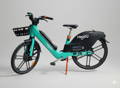
hoppy ebike

Hoppy is a player that focuses heavily on shared electric vehicles (bicycles and scooters) and is active in certain cities such as Genk and Izegem.

The concept: free-floating by zone

Hoppy works with parking zones indicated in the app. You can start and end your trip in any official zone within the city or region.

Locations and usage

  • Presence: currently in certain specific cities and regions.
  • Cities: mainly active in large cities such as Antwerp and Brussels.
  • Vehicles: Hoppy focuses on shared electric bikes, but also offers scooters and e-mopeds.
  • Usage: You scan a QR code on the handlebars to unlock the bike.
  • Pause: option to pause your journey (the bike remains reserved for you) for a small additional fee (e.g., $0.05 per minute)

Rates

Hoppy rates may vary depending on the city. Here are the details for Genk and Izegem:

  • One-time rental (e-bike): €1 per hour, €3 for 4 hours, €5 for 12 hours, and €7 for 24 hours; pausing costs approximately €0.01 per minute.
  • Limited-time subscriptions: weekly pass ± €7 or monthly pass ± €10, each including 2 hours of bike use per day.
  • Unlimited subscription: unlimited monthly subscription for approximately $35 per month for unlimited daily use (within the applicable daily limits).

Benefits

  • Price: very competitive hourly rates for electrical assistance.
  • Pause button: handy for quickly popping into a store; the bike remains reserved.
  • Electric: ideal for hilly areas or longer journeys without excessive effort.

Disadvantages

  • Limited coverage: less widespread throughout Belgium than Blue-bike.
  • Parking rules:Parking rules: the journey can only be completed if the GPS detects correct parking in an authorized area.

Comparative overview

FeaturesBlue-bikeDonkey RepublicHoppy
SystemBack-to-One (return to starting point)Back-to-Many (hub-to-hub)Based on zones
Main locations>110 stations (national)Antwerp, Mechelen, Ghent, WaaslandGenk, Izegem (local/regional)
Type of bikeCity bike & e-bikeOrange city bike & e-bikeMainly e-bikes (& scooters)
AccessCard or application (key)Application (Bluetooth)Application (QR code)
Pricing modelSubscription + price per tripPer 30 min / subscriptionsInitial charge + price per minute/hour
Unique advantageGuaranteed return + repair assistanceOne-way trips between citiesVery low e-bike rates (locally)

Conclusion: Which bike is best for you?

Guide to bike sharing

Blue-bike vs Donkey Republic vs Hoppy: Which one should you choose?

Blue-bike

Back-to-One model

Ideal for the "last mile": you pick up and return the bike at the same location (train station).

The top choice for commuters who take the train daily.

Donkey Republic

Back-to-Many model

Total flexibility: drop off your orange bike at any official hub in the city.

Perfect for simple trips from A to B with no obligation to return.

Hoppy

Electric & Zones

Specialist in free-floating electric bikes by zone with a very practical "pause" option.

The best value for money for local electric assistance.

Reliability

Support included

Available in over 110 stations with free Ethias breakdown assistance included.

The guarantee that you will always have a bike ready for your return journey.

Technology

Keyless (Bluetooth)

Everything is managed via smartphone. One account for over 60 cities in Europe.

Ideal for travelers and inter-municipal travel.

Conclusion

What choice should I make?

Blue-bike for the train, Donkey for the city, Hoppy for low-cost electric bikes.

Always check the zones on the apps before you leave!

Choosing the right bike-share bike depends entirely on your journey.

  • Choose Blue-bike if you are a train user who needs a reliable bike to get to an appointment and then back to the station. It's like having your own bike waiting for you at the station.
  • Choose Donkey Republic if you want to make a simple trip (for example, from a train station to your home or a ride in the Mechelen/Antwerp area) without having to return the bike to the starting point. The flexibility of the hubs makes them the best option for trips "from A to B."
  • Choose Hoppy if you are in a specific city such as Genk and want to get around comfortably on an electric bike at a low price. The pause system is also convenient for shopping or short stops.

To find out the latest rates and exact locations, it is always advisable to download the respective apps, as prices and zones are updated regularly.

FAQ

Which bike-sharing system is best suited to train travelers in Belgium?

For train travelers, Blue-bike is the best choice. The system is specially designed to complement SNCB travel, with locations in more than 110 stations and the certainty of being able to use the same bike for the return journey.

Can I use a bike-share bike in Belgium for a one-way trip without returning it?

Yes. Donkey Republic and Hoppy allow one-way trips. Donkey Republic operates from hub to hub, while Hoppy is based on zones where you can leave the bike in an authorized parking area.

Which operator offers the most shared electric bikes?

Hoppy focuses almost exclusively on electric vehicles and offers very competitive rates for e-bikes. Donkey Republic also offers e-bikes in several cities. Blue-bike offers e-bikes, but not yet at all locations.

Do I still need a subscription to use a bike-share program?

No. All three operators offer options without long-term subscriptions. Blue-bike offers tickets without an annual subscription, while Donkey Republic and Hoppy allow one-off trips via their app. However, subscriptions remain significantly more advantageous for frequent users.

What happens in the event of a breakdown or defect along the way?

At Blue-bike, Ethias breakdown assistance is included as standard. At Donkey Republic and Hoppy, assistance is provided via the app; in general, you can take another bike or the journey is interrupted at no extra cost.

Do you still have questions?

Contact us by email: support@upway.shop