
How far can you ride an electric bike on a single charge?
battery size. Battery capacity, engine type, driving style, weight and even the weather all play their part in determining final range.
Find out here about average distances according to battery type, the factors that influence range and the best tips for getting the most out of your e-bike.
Written by: Hanna Stevens | October 21, 2025 | Reading time: 5 minutes

More about the author: Hanna Stevens
Hanna is an avid cyclist who loves exploring new routes and sharing her experiences to inspire others to get on their bikes more often.

Key findings
- The average range of an electric bike is between 50 and 120 kilometers per charge, depending on battery capacity, riding style and outdoor conditions.
- Factors such as temperature, rider weight, tires pressure and assistance level have a major influence on the distance actually covered.
- With intelligent use and good maintenance, such as riding in Eco mode and storing the battery at room temperature, you can considerably increase the range and life of your e-bike.
What is the average range of an e-bike?
Modern electric bikes usually achieve a range of 50 to 120 km per full charge. Read more in our guide to range and how to improve it.
Here are a few guidelines based on battery capacity:
- Entry-level models (300 Wh): 40 - 60 km
- Mid-range E-bikes (400-500 Wh): 70 - 100 km
- Powerful models (625-750 Wh): up to 120 km or more in ideal conditions
According to Great E-bike, a 500 Wh battery can cover around 60 km in optimal conditions (80 kg rider, slightly hilly terrain).
In practice, range varies greatly according to temperature, weight, level of assistance and terrain.
Factors influencing battery life
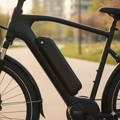
1. Battery capacity and motor type
Capacity, expressed in Watt-hours (Wh), is the main factor: the higher it is, the greater the energy available.
Examples (under ideal conditions) :
- 260 Wh → approx. 40 km
- 375 Wh → approx. 60 km
- 520 Wh → approx. 80 km
Central motors(Bosch, Shimano Steps) are generally more efficient than front or rear motors, offering up to 10-15% extra range.
2. Assistance level and driving style
The assistance mode has a strong influence on fuel consumption:
- Eco mode = maximum autonomy
- Turbo mode = up to 40% more fuel consumption. The eBikes.org website (2023) recommends "starting with low assistance and gradually increasing" to optimize range.
3. tires weight and pressure
The heavier the load (luggage, child, trailer), the harder the motor works and the faster the battery drains. If the pressure is too low, rolling resistance increases, resulting in up to 10% loss of range.
4. Weather and terrain
Temperature, wind and altitude differences have a major influence on autonomy:
- < 10 °C: approx. 10% capacity loss
- < 0°C: up to 30-40% loss(Ryder Electronics, 2025)
- According to Shimano, charging a battery in a cold environment (~5°C) temporarily reduces maximum capacity.
On a hilly route or in winter, you can easily lose 20-30% of your range.
Summary table
| Factor | Description / Influence | Effect on autonomy |
|---|---|---|
| Battery capacity (Wh) | The higher the capacity, the greater the energy available. | 260 Wh → ± 40 km 375 Wh → ± 60 km 520 Wh → ± 80 km |
| Motor type | Central engine more efficient than front/rear engine. | +10-15% autonomy |
| Assistance / driving style | High mode = increased consumption. | Eco = max Turbo = +40% consumption |
| Weights & loads | More load = more motor effort. | -10 to 25% autonomy |
| Pressure tires | Low pressure = more resistance. | -10% autonomy |
| Weather & temperature | Cold and wind increase consumption. | <10 °C : –10 % <0 °C : –30–40 % |
How to increase the range of your e-bike?
Here are a few practical tips to optimize your independence:
- Drive in Eco mode as often as possible.
- Recharge regularly, even if the battery is not discharged, to avoid deep discharges.
- Store the battery at room temperature (≈ 20°C).
- Plan your trip with an e-bike app or planner showing estimated range.
- Maintain your bike regularly: tires pressure, weight on board, constant speed - all these factors prolong its life and autonomy.
Estimated range based on battery capacity
| Battery capacity | Average range |
|---|---|
| 300 Wh | 40 - 60 km |
| 400 Wh | 60 - 80 km |
| 500 Wh | 80 - 100 km |
| 625 Wh | 100 - 120 km |
| 750 Wh | 120 - 140 km |
These values are average estimates under favorable conditions.
Conclusion
The actual range of an electric bike depends on a number of parameters: battery, motor, assistance level, weight and riding conditions. On average, it's between 50 and 120 km per charge, with top-of-the-range models able to exceed 120 km. With judicious use and good maintenance, you can significantly increase this distance.
Sources
- Great Ebike (2025): All about the range of an e-bike
- E-bikes.org (2023) : How to Maximize Your E-Bike's Range
- Ryder Electronics (2025): How does temperature affect an electric bicycle battery?
- Shimano: Looking after your e-bike battery in winter
FAQ
How far can an e-bike travel on a full charge?
Between 50 and 120 km, depending on capacity, driving style and conditions. Models with 625-750 Wh batteries can exceed 120 km.
What factors most influence autonomy?
Battery capacity (Wh) and assistance level. But temperature, tires pressure, weight and terrain also have a strong impact.
What loss of autonomy in winter?
Under 10°C, autonomy can be reduced by 20-30%; under 0°C, by up to 40%.
How can I extend battery life?
Recharge regularly, keep it at room temperature (15-20°C), avoid full discharges and use the Eco mode.
When should the battery be replaced?
After 4-6 years, or 500-700 charging cycles, capacity decreases significantly. A sudden drop in autonomy is often a sign that replacement is necessary.