
How do you inflate a bicycle tire ? And how much pressure should be used?
Many cyclists know that a well-inflated tire makes riding more enjoyable, but don't always know how to go about it or what pressure to apply. Don't worry: with this step-by-step guide, you'll be able to inflate your tires easily and safely, including those on electric bikes, which require slightly more precise pressure.
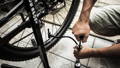
Why is the right pressure so important?
With the right pressure in your tires, you pedal more easily, expend less energy and enjoy better grip. tires that are too soft lead to more resistance, premature wear and an increased risk of punctures, while those tires are too hard reduce comfort and can even cause the tire explode. Correct tire pressure is particularly important on electric bikes, as their heavier weight puts extra load on the tires.
How much pressure should you put on your tires ?
The ideal pressure depends on the type of bike, the width of the tire and your weight. Always check the side of the tire : the recommended pressure is indicated (e.g. 3 to 5 bar).
| Type of bike | Recommended pressure (bar) | Remarks |
|---|---|---|
| City bike | 3,5 - 4,5 | Everyday comfort |
| Electric bicycle (e-bike) | 3,5 - 5 | A little more pressure, better autonomy |
| Racing bike | 6 - 8 | Less resistance, more speed |
| MTB (MTB) | 1,8 - 3 | Better grip on uneven terrain |
| Cargo bike | 4 - 5 | Supports higher weights |
| Children's bikes | 2 - 3 | Added stability and comfort |
Do you often carry luggage or weigh a bit more? Add about 0.5 bar.
How do you know how much pressure is left?
Preferably use a pump with a pressure gauge. Digital models stop automatically at the right pressure, which is very practical for e-bikes. Check pressure at least once a month.
How to inflate a bicycle tire
1. Identify valve type
- Dunlop (Dutch valve): common on city bikes and e-bikes.
- Presta (French valve): typical of racing bikes.
- Schrader (auto valve): as on cars, sometimes on e-bikes.
2. Choose the right pump
- Hand pump: practical for commuting.
- Foot pump with pressure gauge: ideal for home use.
- Electric pump: for effortless inflation.
- Check that the tip corresponds to your valve type (small for Dunlop/Presta, large for Schrader).
3. Connect the pump correctly
- Place the mouthpiece straight and tight over the valve.
- For Presta valves: slightly unscrew the small nut before pumping, then screw it back on.
4. Inflate to correct pressure
- Follow the instructions on the tire.
- Inflate gradually, checking with the pressure gauge.
- Take temperature into account: pressure increases in hot weather and decreases in cold weather.
5. Close the valve
- Replace the cap.
- Check that no air leaks are audible.
Tips specific to electric bikes
As e-bikes are heavier, add about 0.5 bar more than a conventional bike.
Choose reinforced tires specially designed for electric bikes: stronger and more durable. Check tire pressure more often, as tires deflate faster under heavy loads.
What happens when the pressure is incorrect?
Too soft:
- Increased risk of punctures ("pinching", premature wear)
- Less comfort, more effort
- Reduced range on e-bike (more resistance)
Too hard:
- Less comfort on uneven roads
- Risk of tire explosion (especially with high loads)
- Less grip on wet roads
Always follow the manufacturer's recommendations and adjust according to your use.
Common mistakes and maintenance tips
- Never inflate "by feel": use a pressure gauge.
- Use the right pump for your valve.
- Always close the cap after inflation.
- Check your tires every month: remove small stones and spot cracks.
A good inflation is a small maintenance gesture for a big comfort: less breakdowns, a better autonomy and a renewed pleasure of pedaling!