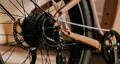
Yamaha electric bike motors explained: power, feel, and reliability

When we think of electric bike motors, brands such as Bosch and Shimano often spring to mind. But did you know that Yamaha is actually one of the true pioneers of the modern electric bike? Back in 1993, Yamaha launched the first mass-produced electric bike. With over 30 years of experience, the Japanese brand has built a solid reputation for innovation, reliability, and, above all, a natural riding experience.


In this article, we take you on a journey through the world of Yamaha e-bike systems. We review the different motors, key technologies, their strengths and limitations, as well as the types of cyclists for whom a Yamaha motor is best suited. Read our article on Yamaha motor error codes.

Written by: Hanna Stevens | January 19, 2025 | Reading time: 6 minutes

More about the author: Hanna Stevens


Hanna is an avid cyclist who loves exploring new routes and sharing her experiences to inspire others to get on their bikes more often.
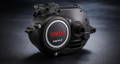
Yamaha e-bike motor

Key findings

  1. Yamaha is the pioneer of electric bicycle motors.
  2. "Pure Ride" means a natural riding sensation.
  3. Reliability is their greatest asset.

The philosophy: "Pure Ride" and natural assistance

At the heart of Yamaha's philosophy lies the concept of "Pure Ride." It's not just about raw power, but above all about assistance that feels natural and intuitive. Thanks to its long experience in motorsports, Yamaha has succeeded in creating a riding experience that is powerful, smooth, and reassuring.

This is made possible by advanced sensor technology. Yamaha systems often use a Quad Sensor system (or equivalent technology) that continuously measures what is happening while riding: speed, pedaling force, crank rotation, and tilt. Based on this, the motor provides the most appropriate assistance at all times. A major advantage is Zero Cadence technology: the motor kicks in immediately as soon as you press the pedal, without having to make a half turn.

This direct responsiveness makes Yamaha motors more enjoyable than systems that only "kick in" after half a pedal rotation.

The engine range: from technical trails to quiet urban journeys

Yamaha offers a clearly segmented range, so that every type of cyclist can find the right motor for them. Here are the main models and their features.

1. For athletic performance: PW-X3 and PWseries S2

Designed fore-MTB enthusiasts and sporty cyclists, these motors are true powerhouses.

PW-X3

This is the top-of-the-line model forMTB. With a torque of 85 Nm, it allows you to climb even the steepest hills with ease. The PW-X3 stands out thanks to its compact design and low weight: it is 20% smaller and 10% lighter than its predecessor, the PW-X2. It weighs just 2.75 kg. This compact size gives manufacturers more freedom to optimize frame geometry and ground clearance.

PWseries S2

This motor was designed as a lighter and more powerful successor to the popular PWseries ST, based on the principle of "less is more." It delivers 75 Nm of torque and weighs only 2.85 kg. Thanks to a shorter bottom bracket, pedaling is more efficient and natural. The S2 is therefore particularly suitable for sports and trail riding.

2. For comfort and city driving: PWseries TE and CE

Not everyone wants to climb mountains at top speed. For commuters and urban cyclists, the focus is on stability and quietness.

PWseries TE

This motor is primarily designed for comfort and stability in urban environments. It develops 60 Nm of torque and uses Quad Sensor technology. These sensors continuously analyze driving conditions and automatically detect, for example, an incline or headwind. The assistance then adapts itself, ensuring a smooth ride at all times.

PWseries CE

This is Yamaha's quietest and lightest option for urban use (starting at 2.9 kg). With 50 Nm of torque, it is ideal for flat terrain, such as city centers and commutes. A notable advantage is its compatibility with a coaster brake, which is still widely used in countries such as the Netherlands. Yamaha also presents it as its quietest drive unit to date, a valuable asset when traveling in the morning.

Overview of engines

EngineUsage/targetTorque (Nm)WeightKey features
PW-X3MTB athletic / steep trails85 Nm2,75 kgFlagship model forMTB, 20% more compact and 10% lighter than the PW-X2, offering greater freedom for frame geometry and ground clearance.
PWseries S2Sporty driving / trail75 Nm2,85 kg"Less is more," shorter bottom bracket for greater efficiency, lighter and more powerful successor to the PWseries ST
PWseries TECity / comfort / stability60 Nm-Quad Sensor technology, assistance that automatically adapts (climbs, headwinds)
PWseries CECity / daily commutes / flat terrain50 Nmfrom 2.9 kgThe quietest and lightest urban option, compatible with coaster brakes, very comfortable for morning commutes.

Unique features and technologies

rear engine

What sets a bike equipped with a Yamaha engine apart from its competitors? Here are the key features you need to know about.

Automatic assistance mode

This is one of Yamaha's smartest features. The motor automatically switches between assistance levels (Eco, Standard, and High) depending on your needs.

When riding into the wind or uphill, the assistance automatically increases. On flat terrain, it decreases to save energy. So you don't have to constantly change modes: the system adapts for you.

Screens for every type of user

Yamaha offers different screens depending on your use:

  • Interface X: a compact, minimalist LED unit on the stem. Ideal for mountain bikers who want a clean cockpit. Compatible with apps and computers via ANT+ and Bluetooth.
  • Display B: a simple 3-inch LCD screen, centered on the handlebars. Designed for simplicity: just turn it on and ride. Includes a USB port for charging a smartphone.
  • Display C: a 2.8-inch color screen with advanced connectivity features, including Komoot for navigation.

Wide selection of batteries

Yamaha offers batteries with different capacities, ranging from 400 Wh to over 600 Wh. They come in several configurations: integrated into the frame (in-tube), on the down tube, or integrated into the luggage rack. So there is always a solution to suit your bike and your use.

Strengths and weaknesses

Based on the specifications and Yamaha's position in the market, here is a balanced overview.

Highlights

  • Reliability: Yamaha has an excellent reputation. The internal components are maintenance-free, and the engines are well protected against overheating and external damage.
  • Immediate responsiveness: thanks to Zero Cadence technology, starting at a red light or on a hill is smooth and powerful.
  • Innovative automatic mode: automatic assistance is a real differentiating factor that significantly improves driving comfort.
  • Compact and lightweight: the new PW-X3 and S2 motors are among the lightest and most compact in their class, making for a more maneuverable bike.
  • European production: part of the production has been transferred to the MBK Industrie plant in France, reducing lead times for the European market and contributing to carbon neutrality.

Weaknesses

  • Lower torque on urban models: the PWseries CE offers 50 Nm. Sufficient on flat terrain, but sometimes less convincing in very hilly areas or with a heavy load.
  • Availability: Yamaha is not available for all brands. If you absolutely want a Yamaha engine, you are limited to manufacturers that have chosen it (such as Batavus or Raymon), which may reduce your choice of models.
  • Specific features of chargers: chargers are robust and specific, but come with certain instructions for use, particularly for inexperienced users, which are primarily for safety reasons.

Which brands and which bikes?

Batavus

A good example is the Batavus Razer, a sporty electric bike ideal for commuting, equipped with a powerful Yamaha mid-drive motor (often 70 Nm or more depending on the version).

Raymon

Raymon works closely with Yamaha and offers a wide range of models: Crossray and Tourray (trekking/hybrid) for long distances, as well as the more robust Trailray and Hardray forMTB. Depending on the model, different Yamaha motors are used, from comfortable motors to the most powerful e-MTB versions.

Yamaha bikes

Yamaha also produces bicycles under its own brand. Models such as the CrossCore RC (urban), Booster (fatbike style), Wabash RT (gravel), and Moro 07 (MTB) are designed entirely around Yamaha motor systems.

Conclusion

An electric bike equipped with a Yamaha motor is an excellent choice if you are looking for proven quality and a natural, intuitive riding experience.

  • Choose the PW-X3 or PWseries S2 if you are a passionate mountain biker or sporty cyclist looking for maximum power (up to 85 Nm) in a lightweight and maneuverable bike.
  • Choose the PWseries TE if you mainly commute to work and often ride in all weather conditions. It offers stable assistance that adapts intelligently, especially when riding into the wind.
  • The PWseries CE is ideal for urban cyclists who prioritize quietness and simplicity, and who may appreciate the coaster brake.

With 30 years of innovation, Yamaha offers a reliable and modern alternative in the electric bike market. Whether you're riding around town on a Batavus, going on long rides on a Raymon, or tackling the mountains on a Yamaha Moro, the "Pure Ride" philosophy always puts technology at the service of your riding pleasure.
Still unsure about which motor is best suited to your needs? Consult our motor guide.

FAQ

Is Yamaha better than Bosch?

Neither better nor worse, but different: Yamaha often offers a more direct feel.

What is the lifespan of a Yamaha engine?

Under normal use, tens of thousands of kilometers.

Are Yamaha engines quiet?

Yes, especially the PWseries CE, which is extremely quiet.

Can I replace a Yamaha battery myself?

It depends on the bike model, but in most cases, yes.

What is the most powerful Yamaha engine?

The PW-X3 with a torque of 85 Nm.

Do you still have questions?

Contact us by email: support@upway.shop