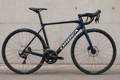
Review of the Orbea Orca M30

Orbea presents the Orca as its climbing-oriented road bike platform, and the M30 version is the most affordable carbon model in the lineup. With an OMR carbon frame, a full-carbon fork, hydraulic disc brakes, and a Shimano 105 12-speed mechanical drivetrain, on paper this is a modern, fully-equipped road bike, new for new €2,599. For those looking at the used or refurbished market, this segment becomes particularly attractive, since the first owner has already absorbed most of the depreciation.


It’s important to note, however, that the “M30” designation does not refer to a single model. Between the 2021 and 2026 model years, the cockpit, tires several details may vary, and the M30i version is technically very different from the standard M30. Before buying an Orca M30, it is therefore essential to understand where its true value lies and which features are merely “functional.”


Written by: Jos Mans | May 29, 2026 | Reading time: 5minutes

About the author: Jos Mans

Jos is a writer and cyclist, most often both at the same time. With thousands of miles under his belt and just as many words on paper, he combines his two great passions: being on the move and telling stories.

Orbea Orca M30

Key findings

  1. The Orca M30 is built primarily around an excellent carbon frame paired with a solid, reliable build; its true value lies mainly in the frame and brakes, not in the stock wheels.
  2. The Shimano 105 12-speed mechanical groupset is more than sufficient for recreational and competitive cyclists, but be sure not to confuse the M30 with the electronically shifted M30i.
  3. A refurbished Orca M30 becomes particularly appealing when the price is significantly lower than that of new the frame, drivetrain, and brakes have been thoroughly inspected.

Features of the Orbea Orca M30

ComponentOrbea Orca M30
Type of bikeCarbon road bike, sporty all-rounder
FrameOrbea Orca OMR Carbon, monocoque, BB386
ForkOrbea Orca OMR ICR Full Carbon, Tapered
Cable routingInternal
TransmissionShimano 105 R7100/R7120 Mechanical 2x12
PedalsShimano 105 R7100, 50/34
CassetteShimano 105 R7100, 11-34
BrakesShimano R7170 hydraulic disc brakes
WheelsAluminum, tubeless-ready, 700c, 19c
tiresContinental Grand Prix 700x28c
Seat postCarbon, 27.2 mm, 20 mm offset
SaddleFizik Aliante R5
Weight (test size 53)About 9.1 kg
Variation — cautionM30 = mechanical / M30i = Shimano 105 Di2

Where does the Orca M30 fit into the Orbea lineup?

Within Orbea’s road bike lineup, the Orca is the lightweight, mountain-oriented model. The Orbea Orca Aero focuses more on speed and aerodynamics, the Orbea Avant prioritizes endurance, while the Orbea Terra model is designed for gravel riding. The “standard” Orca sits between these categories: a sporty and versatile road bike with responsive handling.

The M30 is the most affordable version of this Orca platform. It features the OMR carbon frame, a full-carbon fork with internal cable routing, a tapered head tube, and the BB386 bottom bracket standard. In other words, the basic architecture is the same as on the higher-end models. The differences lie mainly in the wheels, the cockpit, the seatpost, and the possible inclusion of an electronic groupset.

Important note: The M30 and M30i are not the same bike. The M30 uses a mechanical 12-speed Shimano 105 groupset, while the M30i is equipped with the electronic Shimano 105 Di2 groupset. In used or refurbished listings, these two versions are sometimes confused, which can result in a price difference of several hundred euros. This is the first thing to check before entering into any negotiations.

The equipment under scrutiny

The Shimano 105 R7100 mechanical 2x12 groupset is no longer an “entry-level groupset” in the traditional sense. Shift changes are precise, and the hydraulic brakes offer power and feel very similar to what you’d find on a bike equipped with Ultegra. For cyclists who don’t race and don’t need the sophistication of electronic shifting, it’s a reliable, durable, and relatively easy-to-maintain groupset.

The gear ratio is well-designed. The 50/34 crankset paired with an 11-34 cassette provides gear ratios that are sufficiently smooth for long climbs, whether in the Ardennes, the Alps, or the Pyrenees. For most recreational cyclists, this is exactly the right gear range.
The tubeless-ready aluminum wheels are the weakest link in the setup. They are sturdy and functional, but don’t offer much in the way of responsiveness during sprints or short climbs. The 28 mm tires Grand Prix tires significantly improve comfort, and a tubeless setup provides a noticeable boost in efficiency and handling precision.

That’s precisely what makes this Orca so appealing: the frame, drivetrain, and brakes provide an excellent foundation, while the wheels and tires easy to upgrade later on.

Driving feel: sporty without being twitchy

An Orca M30 Carbon immediately delivers the feel of a modern road bike, without veering into the extremes of a purely competitive machine. On flat terrain, the bike is efficient and precise; the tires mm tires offer much more comfort than the older 23 or 25 mm standards, without making the bike feel heavy or slow.

On climbs, the wide gear range is a definite help, and the frame is stiff enough to efficiently transfer power to the rear wheel. A size 53 test model weighs around 9.1 kg: that’s quite respectable for this price range, even if it’s not exactly a featherweight. Riders tackling back-to-back climbs will notice the weight of the wheels more than that of the frame.

On descents, the Orca inspires confidence. The Shimano 105 hydraulic brakes offer excellent modulation and powerful stopping power, even on wet roads. The geometry remains stable and predictable in fast corners.

On rough surfaces—cobblestones, concrete, or worn-out back roads—it’s clear, however, that this isn’t a comfort-oriented bike. The OMR frame and carbon seatpost do a decent job of damping vibrations for a road bike, but riders who frequently ride on rough surfaces would be better off fitting tires or opting for an endurance model. The Orca is better defined as a versatile sport bike than a pure race bike or a comfortable touring bike.

For which type of cyclist is this a good choice?

The Orbea Orca M30 is ideal for competitive cyclists, club members, and granfondo participants riding on flat or rolling terrain. Competitors looking for the lightest bike possible will naturally turn to the higher-end versions of the Orca or the Orbea Orca Aero. Those who prioritize comfort and long distances above all else should instead consider an endurance model like the Cannondale Synapse Carbon.

On the refurbished market, the Orca M30 becomes particularly appealing when its price is significantly lower than that of new it already features substantial upgrades: better wheels, tires , or a recent drivetrain.

The standard checks for a used carbon bike are still essential:

  • Inspect the frame around the head tube, bottom bracket, and rear dropouts;
  • listen for any creaking noises coming from the BB386;
  • check the chain, cassette, and sprockets for wear;
  • make sure it is indeed an M30 and not an M30i;
  • Make sure the frame size fits your body type.

In this category, the main competitors are the Specialized Tarmac —which has a stronger brand image and higher resale value—and the Giant Advanced, which often offers outstanding value for money.


FAQ

What is the difference between the Orbea Orca M30 and the M30i?

The M30 is equipped with a 12-speed mechanical Shimano 105 groupset. The M30i features the electronic Shimano 105 Di2 groupset. The frame and geometry are similar, but there is a significant price difference. It’s important to check this carefully before making a purchase.

How much does the Orbea Orca M30 weigh?

A test model in size 53 weighs about 9.1 kg, depending on the model year and the accessories installed. That’s a good weight for a carbon bike in this price range, even if it’s not exceptional for a model marketed as a climbing bike.

Is the Shimano 105 12-speed mechanical groupset still up to date?

Yes, absolutely—for the vast majority of recreational and competitive cyclists. The shifting is precise, the hydraulic brakes are state-of-the-art, and mechanical maintenance remains simpler and less expensive than electronic systems. The main differences compared to Ultegra or Dura-Ace lie in weight and finish.

What kind of cyclist is the Orbea Orca M30 best suited for?

It’s perfect for competitive cyclists, club members, and enthusiasts of long, hilly rides. The geometry is sporty without being extreme, and the gear ratios are wide enough for mountain passes and mountainous routes.

What should you look out for when buying a refurbished Orca M30?

Inspect the carbon frame for any dents around the head tube, bottom bracket, and seat stays. Check for any creaking in the BB386, wear on the drivetrain, and the condition of the disc brakes. Also make sure it is indeed an M30 and that the frame size is right for you.

Do you still have questions?

Contact us by email: support@upway.shop