How many pounds can a cargo bike carry?

This is a tricky question, because we often try to summarize in a single figure what actually corresponds to three different elements: stability, braking power, and the accuracy of specifications. And this is precisely where things get complicated when making a purchase. Manufacturers use the term "max load" as if it were a universal measurement, when some are referring to the total authorized weight and others only to the weight in the box. As a result, we compare a cargo bike advertised as 250 kg with another limited to 180 kg, when in practice their actual capacities are sometimes much closer than we think. If you are riding with children, groceries, or professional equipment, the real question is: what can I safely transport in bad weather with a full box?

Written by: Jos Mans | February 4, 2026 | Reading time: 6minutes

About the author: Jos Mans

Jos is a writer and cyclist, most often both at the same time. With thousands of miles under his belt and just as many words on paper, he combines his two great passions: being on the move and telling stories.
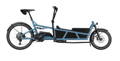
Riese & Müller

Key findings

  1. Total weight ≠ payload. Total weight includes the bike + you + everything you are carrying.
  2.  The payload corresponds to what you can add on top.
  3. Partial limits take precedence. A bicycle can carry a total of 250 kg, but may have a lower limit for the box or rear rack.
  4. Heavy loads are all about control. Brakes, tires wheels determine whether driving remains safe and enjoyable.

What many people misjudge

The first common mistake is to see "250 kg" and think of 250 kg of cargo. However, this figure also includes the weight of the bike itself (often 40 to 55 kg) and that of the cyclist. Let's take a classic front cargo bike: if the bike weighs 50 kg and you weigh 85 kg, that leaves 250 − 50 − 85 = 115 kg for children and luggage. And this calculation doesn't even include accessories (rain cover, extra battery, child seats).

Second mistake: perception. 80 kg is not always "just" 80 kg. 80 kg placed low and between the two wheels is stable. 80 kg high up on a rear rack gives the impression of a wobbly tower: more significant steering corrections, longer braking distance, and sometimes a front wheel that lifts off the ground on speed bumps or during heavy braking.

Third mistake: underestimating wear and tear. A heavy load not only puts more strain on the frame, but also on the brakes, tires, spokes, and bearings. This is particularly noticeable during wet months: more weight = more energy to dissipate when braking = more heat in the discs and pads, and tires wear out faster if you often ride at low pressure.

From numbers to reality: how weight really feels

The difference isn't just how much you carry, but where:

  • Low and centered (in a front box or between the wheels): predictable behavior.
  • Top and rear: heavier steering, more demanding braking, less serene overall feel.

The key takeaway: transporting heavy loads is not primarily a question of the frame, but of control. In practice, it is the brakes, tires, wheels, and steering that determine whether "lots of weight" remains synonymous with normal driving.

The 4 types of cargo ships and their limitations

There are broadly four categories where the issue of weight constantly comes up. Each has its own logic... and its pitfalls.

Front loader (2 wheels) – front-mounted box
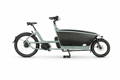
Front loader

  • Urban Arrow Family: 250 kg total weight, 125 kg in the box, 125 kg max for the cyclist.
  • Strength: low and very stable load.
  • Caution: partial limits must be taken into account.

Longtail extended rear luggage rack
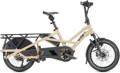
Longtail

  • Tern GSD: 210 kg total, rear rack up to 100 kg.
  • Strength: versatile and more compact than a front loader.
  • Pitfall: the weight is often higher and further back → different steering feel.

Performance front loader – more agile, often lower total weight
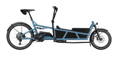
Front loader

  • Riese & Müller Load 75: 200 kg total permissible weight.
  • Strength: Handling closer to that of a conventional bicycle, even when loaded.
  • Pitfall: we are buying less of a "workhorse" than a quality of driving.

Checklist: checking your weight without making mistakes

1. Find the correct number (and its definition)

  • Maximum gross vehicle weight / MGVW / GVWR = all inclusive
  • Payload = the load (definition varies depending on the brand)
  • Cash register/luggage rack limits = partial limits

2. Do the math for your situation

Maximum total weight − weight of the bike − your weight = actual available load

3. Identify the limiting factor

  • frontloader limit
  • rear luggage rack limit (longtail)
  • rider weight limit
  • brakes / tires wheels (control elements)

Why refurbished often a logical choice for cargo

When riding with a heavy load, the latest model isn't essential. What you need is the certainty that the key components are doing their job: brakes, wheels, tires, bearings, steering. This is precisely where refurbished parts, if properly inspected, are not a compromise but often a reduction in risk: fewer unknowns, more solid foundations, and real control over weak points.

FAQ

What is the difference between total weight and payload?

The total weight includes the bike, rider, and luggage/passengers. The payload is what you can carry, but its definition varies depending on the brand. The total weight is therefore often the best starting point, provided you deduct the weight of the bike and yourself.

How many pounds can you put in the box of a cargo bike?

This depends on the model and is often a separate limit from the total weight. For example,Urban Arrow can carry up to 125 kg in the front box. Always check the official specifications.

Is a longtail bike as suitable as a cargo bike for transporting children?

For many families, yes. Longtails are more compact and surprisingly buoyant, but the weight is often higher and further back, which changes the handling. A test with a full load is highly recommended.

Why does the same weight appear stable on one bike and unstable on another?

Because of the center of gravity and wheelbase. Weight high up or at the rear makes steering more responsive and can lighten the front wheel when braking or over obstacles. Low, centered weight remains more stable.

Which parts wear out the fastest on a heavily loaded cargo ship?

In general, brake pads and tires , then spokes/wheels and bearings. In wet weather, these components deserve special attention.

Do you still have questions?

Contact us by email: support@upway.shop