
Tailles de cadre pour vélo de route
Un vélo de route est un instrument de précision. Là où, sur un vélo de ville, un réglage de selle légèrement trop bas peut encore passer, sur un vélo de route chaque millimètre compte en raison du mouvement répétitif et de la position aérodynamique. Un cadre bien adapté constitue donc la base de votre plaisir à vélo. Mais comment déterminer la taille de cadre qui vous convient ? Nous vous l’expliquons ci-dessous.

Écrit par : Dieter Devriendt | 24 Avril 2026 | Temps de lecture : 6 minutes

En savoir plus sur l’auteur : Dieter Devriendt
Le journaliste Dieter écrit avec passion et expertise sur le monde du vélo. Sous la devise « we write – we ride », il partage volontiers son expérience avec les cyclistes afin de leur faciliter la vie, sur la selle comme en dehors.
Principales conclusions
- La bonne taille de cadre est essentielle pour le confort, la prévention des blessures et l’efficacité du pédalage.
- Il est préférable de déterminer votre taille de cadre à partir de votre longueur d’entrejambe, complétée par d’autres méthodes et facteurs personnels.
- Outre la taille, la géométrie du vélo, la flexibilité et les réglages jouent un rôle majeur dans l’ajustement global.
Le guide pour un ajustement parfait
Les avantages d’une taille de cadre adaptée
Confort optimal et prévention des blessures
Confiance et comportement du vélo
Méthodes pour déterminer votre taille de cadre
La longueur d’entrejambe (méthode classique)
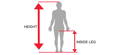
- choisissez la plus petite pour une position sportive/compétitive
- choisissez la plus grande pour plus de confort
La taille corporelle (indication rapide)
- 160 – 165 cm → tailles 48 – 50
- 170 – 175 cm → tailles 52 – 54
- 180 – 185 cm → tailles 56 – 58
- à partir de 190 cm → tailles 60 – 62
Stack & reach (standard moderne)
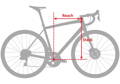
- stack : distance verticale entre le boîtier de pédalier et le haut du tube de direction (hauteur du vélo)
- reach : distance horizontale entre le boîtier de pédalier et le tube de direction (allongement du cycliste)