The best electric bikes for hills: 7 choices that really make a difference

There is a moment when many electric bike buyers make a mistake: they look at the technical specifications, see "high torque" and "large battery," and think that everything is sorted. Climbs shatter this illusion. Not because the motor suddenly becomes bad, but because climbing imposes other requirements: usable power at low cadence, traction and adjustable assistance on steep or loose terrain, and stability when riding with a load (panniers, children, cargo bike). This is where you feel the difference between an electric bike that pulls you up and a bike that makes you work.

Written by: Jos Mans | January 27, 2025 | Reading time: 5minutes

About the author: Jos Mans

Jos is a writer and cyclist, most often both at the same time. With thousands of miles under his belt and just as many words on paper, he combines his two great passions: being on the move and telling stories.
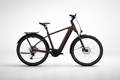
Kathmandu cube

Key findings

  1. It is not the maximum torque that wins, but the engine that remains calm and predictable at low revs (and low speeds).
  2. The Bosch Performance Line CX (Gen5) with the performance update is the most consistent all-round climber; the DJI Avinox is extremely powerful but requires more control and grip management.
  3. refurbished bikeschange the equation: same climbing performance, lower price tag, and often an extra layer of control over wear points (brakes, transmission, bearings).

What is often underestimated with electric bikes for climbing hills

Most buyers look at two figures: Nm and battery capacity. This is logical, but incomplete. When climbing, you can feel the difference between power "on paper" and power that is actually available when your cadence drops, your speed slows down, and you are looking above all for calm and consistency. Here are three key points:

1. Low-speed assistance (±50–70 rpm)

On steep sections, you naturally lose pedal revolutions. Some systems therefore seem less powerful than expected, simply because they are designed with a different character in mind (light and natural rather than "tractor-like"). This is not a mistake, but it needs to suit your use.

2. Weight + load: this is not a minor detail

A trekking bike with full panniers or a cargo bike with children has completely different requirements than a sporty MTB. On long climbs, weight becomes a key factor. You want stable geometry, smooth power, and a drivetrain that doesn't get out of control.

3. System stability

Pushing too aggressively can cause you to lose traction, especially on wet ground, loose terrain, or in tight turns. You won't notice this during a short test ride on flat ground, but you will when you tackle several climbs in a row.

What marketing says... and what really matters

Brands like to sell peak power: "up to 100 Nm," "boost," "racing sensation." When climbing, it all boils down to three questions: is it controllable? Is it consistent? And how much stress does it put on you?

Bosch Performance Line CX (Gen5) + performance upgrade

The headlines talk about higher figures (notably 100 Nm and 750 W of peak power via updates/adjustments in Flow). What matters more in practice is that this family of Bosch motors is renowned for its predictability when the going gets tough, with low cadence and high loads, continuing to push without any strange peaks. For many, it's the safest choice for "always reaching the top."

DJI Avinox

Avinox delivers insane power: in Boost mode, it can reach up to 120 Nm and 1000 W at peak. This can make climbing almost easy, but it also transfers more responsibility to the rider: pacing themselves, maintaining traction, and avoiding rear wheel spin on wet hairpin turns. Sporty riders love it. Those who are looking for a more relaxed ride are often better served by Bosch.

Lightweight systems (such as the TQ HPR50)

The TQ HPR50 embodies the other promise: lightweight, compact, natural. With 50 Nm and a motor weighing approximately 1.85 kg, you're not buying a tow truck, but "assisted sport."
 Climbs? Yes. Moving with panniers? That's where you quickly reach your limits.

The 7 electric bikes that take hills seriously

I deliberately choose different categories, because "climbing" does not only meanMTB. Some people have to climb with heavy loads, others with children.

1. Trek Rail+ (MTB with Bosch CX)

The Rail+ is a benchmark: traction, stability, and a Bosch platform designed for heavy, predictable work. Trek is promoting the new CX generation and, depending on the configuration/update, 100 Nm. It's not the lightest, but it is one of the most impressive climbers.

2. Amflow PL Carbon (DJI Avinox)

Avinox is the type of system that makes short, steep ramps seem almost ridiculous. My reservation remains the same: the more explosive the delivery, the more crucial grip and dosage become. Perfect for sporty drivers who like to stay active, playing with modes and transmission.

3. Orbea Wild (MTB )

The Orbea Wild belongs to the same "serious mountain" category: designed to keep going, even when the going gets long and steep. refurbished models are often very attractive, as the concept (frame + geometry + purpose) remains solid; the main thing to check is for signs of wear (brakes, bearings, drivetrain).

4. Riese & Müller Superdelite (trekking + comfort + climbing)

This is the "I carry my whole life with me" category: comfort, stability, and high load capacity. If you're tackling climbs with luggage (or on long days), it makes more sense than a sports bike that you constantly have to "wake up."

5. Cube Kathmandu Hybrid (trekking workhorse)

The Kathmandu is often the rational choice for commuting and traveling: stable frame, luggage options, and, in the right version, sufficient motor power. When comparing, also consider the differences in character between Kalkhoff and Cube.

6. Specialized Turbo SL (MTB )

My favorite for those who want to ride uphill without the motor doing all the work. Lightweight, quiet, excellent on short climbs and hilly terrain. The catch is simple: on long, heavy climbs, you quickly reach its limits. It's assisted exercise, not a touring tractor.

7. Urban Arrow (riding with children and cargo)

Climbing with a cargo bike is a different sport altogether. It's not about speed, but control: gradual acceleration, no rollback, sufficient power at low speeds. The Bosch Cargo Line is designed for heavy loads, with high torque values depending on settings and updates. My advice: accept that consistency is more important than speed. It's safer and more comfortable.

Practical guide: choosing without regret

  • Are you riding with a heavy load or with children? Choose a smooth-delivery full-power motor (Bosch CX or Cargo Line) and pay attention to the gear ratios.
  • Do you ride in a sporty and technical manner?MTB are the most forgiving; Avinox can be fantastic if you like active control.
  • Want something light and natural? Light systems are great, but adjust your expectations: installation yes, moving no.
  • Are you buying refurbished Check even more carefully for accelerated wear caused by climbing: brakes, transmission, bearings.

My recommendation

If climbs are an integral part of your life (vacations, hills, bridges with wind and heavy loads), I almost always choose calmness over bravado.

  • Want to ride and always get the same feeling? Choose the Bosch Performance Line CX (Gen5, with update if available): it's the safest and most versatile choice.
  • Do you want power and do you drive in a sporty way? The DJI Avinox is impressive, sometimes even excessive, but you have to learn how to manage grip and throttle control.
  • Want something light and natural? Consider a light system (Levo SL / TQ-type configurations), but let's be honest: here, we're buying feel, not traction reserves.

But above all: choose the system that stays calm when you are at your limit.

FAQ

Is more torque always better when climbing?

No. What matters most is the usability of power at low cadence and the smoothness of the assistance. A smooth, consistent motor often feels more powerful than a motor with high peaks but is difficult to control.

Are light electric bikes suitable for hilly terrain?

Yes, as long as you pedal actively and don't ride with a heavy load. Light systems are designed for naturalness and lightness, not for repeated climbs with luggage.

What is the difference in range when climbing?

Climbs consume more energy because you are lifting mass. The difference depends on the system, mode, temperature, tires pressure tires weight. Expect significantly less than on flat terrain, especially with wind and a lot of Turbo mode.

refurbished equipment risky for intensive use?

No, if the bike is properly maintained. Climbing hills mainly accelerates wear and tear on the brakes and drivetrain, which are predictable and manageable issues. The advantage is a lower price for the same performance on hills, often with an additional check-up.

What is the most common mistake?

Buy a lightweight or urban system and expect it to perform the same way on vacation or when loaded. Tip: read this article again 😉.

Do you still have questions?

Contact us by email: support@upway.shop