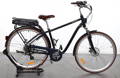
The pitfalls of a cheap electric bike

"Cheap is expensive" is a saying we often hear when looking to buy at the lowest possible price. However, in the case of electric bikes, this does not necessarily have to be true. By carefully following the advice below, it is entirely possible to get a good deal without regretting it later.

inexpensive electric bike

Written by: Jos Mans | February 23, 2026 | Reading time: 6minutes

Learn more about the author: Dieter Devriendt


Journalist Dieter writes passionately and expertly about the world of cycling. Under the motto "we write – we ride," he gladly shares his experience with cyclists to make their lives easier, both on and off the saddle.

Key findings

  1. When buying a low-cost electric bike, pay particular attention to the battery, motor, and road handling.
  2. Maintenance and replacement parts are common hidden costs associated with inexpensive e-bikes.
  3. If you drive daily or travel long distances, it is best to invest in a reliable brand.

What should you avoid when buying a cheap electric bike?

An electric bike is often a significant investment. It therefore makes sense that many consumers are looking for a good deal. Supermarkets, DIY stores, and online discounters regularly offer e-bikes for less than €1,000.

Even if the attractive price is tempting, it often hides compromises that quickly cancel out the initial savings. A bike that is "too" cheap usually means compromises in terms of safety, durability, and after-sales service.

The danger of batteries: much more than just battery life

The battery is the most expensive component of an electric bike. On entry-level models, this is often where savings are made.

Unknown brands

Avoid batteries from unknown manufacturers. These cells lose their capacity more quickly, which means that after a year, you may only be able to travel half the initial distance. A high-quality battery can cost up to €750, which is almost the full purchase price of a cheap bike.

Fire safety

Low-cost charging systems and lower-quality cells increase the risk of overheating and even fire.

Stationary batteries

Stationary batteries

Be careful with bikes equipped with a non-removable integrated battery. This complicates charging and makes replacement or servicing extremely costly.

Engine and road handling: stability or economy?

Cheap electric bikes often use a motor in the front wheel rather than a more stable mid-drive motor.

Road holding

A front motor is less expensive, but can throw the bike off balance and make steering more difficult, especially on wet roads.

Sensors

Entry-level bikes typically use a simple rotation sensor instead of a torque sensor. The result is "all or nothing" assistance that feels unnatural and can be dangerous when starting off or in tight corners.

Hidden costs: maintenance and spare parts

The real problem with a cheap electric bike often arises when a breakdown occurs.

Non-repairable systems

Many local repair shops only work on well-known systems such as Bosch or Shimano, as they have the necessary parts and diagnostic software. A bike equipped with an electronic system without an identifiable brand name may become unusable at the slightest fault, due to a lack of available parts.

Mechanical wear

To reduce costs, manufacturers often cut corners on brakes, tires drivetrains. While a high-quality e-bike can travel ten thousand kilometers with minimal maintenance, low-end components need to be replaced much more quickly.

A critical look at cheap electric bikes

Not all affordable bikes are necessarily bad choices, provided you take a critical approach.

Choose a model equipped with standard components (such as Shimano transmissions or brakes) that any repair shop can service. Also compare the warranties offered on the battery and motor: some brands only offer six months on the battery, while two years is the norm among quality manufacturers.

A cheap electric bike may be suitable for occasional short trips, but for everyday use or long rides, it's better to invest in a reputable brand to avoid frustration and high repair costs in the long run.

Which inexpensive electric bikes are worth buying?

Even though a budget of €1,000 is the entry level for the e-bike market, some manufacturers manage to offer reliable models without falling into the trap of inferior quality. It is essential to choose brands with a solid supply chain and their own service centers.

Decathlon

Stationary batteries

One of the major players in this segment is Decathlon.The B’Twin Elops 900 E model often retails for around €1,000 and offers a surprisingly complete urban experience. Although it is equipped with a rear wheel motor (less expensive to produce), the electronic integration is well done. The motor provides sufficient assistance on flat terrain and the battery is a reliable type, maintained directly by Decathlon.

Another interesting option is the Rockrider E-ST 100, also available at Decathlon. This MTB is designed for recreational rides on unpaved trails. Its range is more limited than on more expensive models, but the mechanical disc brakes are easy to maintain. Often priced at less than €1,000, it's a safe entry point into the world of electric bikes—as long as you don't expect extreme performance.

Stella

In addition to major sports chains, some specialized online retailers also offer good deals.

One example is the Stella Vicenza, which can sometimes be found secondhand or on sale for around $1,000. Although Stella bikes are generally more expensive, their entry-level models equipped with a front motor can be an attractive option for everyday use to school or work.

NCM

The NCM brand is renowned for its excellent value for money.

Models such as the NCM Munich or NCM Prague often offer powerful motors and batteries with higher capacity than competitors in the same price range. The downside, however, is after-sales service: you will usually have to rely on online support or find a local repairer willing to work on this specific brand.

Lidl

The Lidl supermarket, with its Crivit brand, is a notable new player.
These e-bikes are often equipped with a torque sensor rather than a simple rotation sensor, offering a more natural riding experience. Sales are generally made through temporary promotions, but these modern models with their sleek designs are clearly putting pressure on the competition in the budget segment.
In any case, always check the availability of replacement batteries before finalizing your purchase.

Conclusion

A cheap electric bike (less than €1,000) may seem attractive, but it comes with risks: unsafe batteries, unnatural riding behavior due to simplified sensors, and a lack of spare parts.

While suitable for occasional short trips, these models often incur higher costs in the long term due to rapid wear and tear and complex repairs. There are exceptions—notably at Decathlon or Lidl, provided you check the availability of the service and parts in advance.


FAQ

Why are extremely cheap e-bikes often not a good deal?

Because they typically cut corners on the battery, safety, and components, which can lead to high repair costs or dangerous situations.

What should you pay particular attention to when it comes to the battery of a low-cost e-bike?

Avoid unknown brands and fixed (non-removable) batteries, as they wear out faster and are expensive or even impossible to replace.

What is a cheap electric bike suitable for?

For occasional short trips, but not for daily commuting or long distances.

Do you still have questions?

Contact us by email: support@upway.shop