
QWIC Mira Daily Review: A Comfortable and Sturdy Bike with One Major Flaw
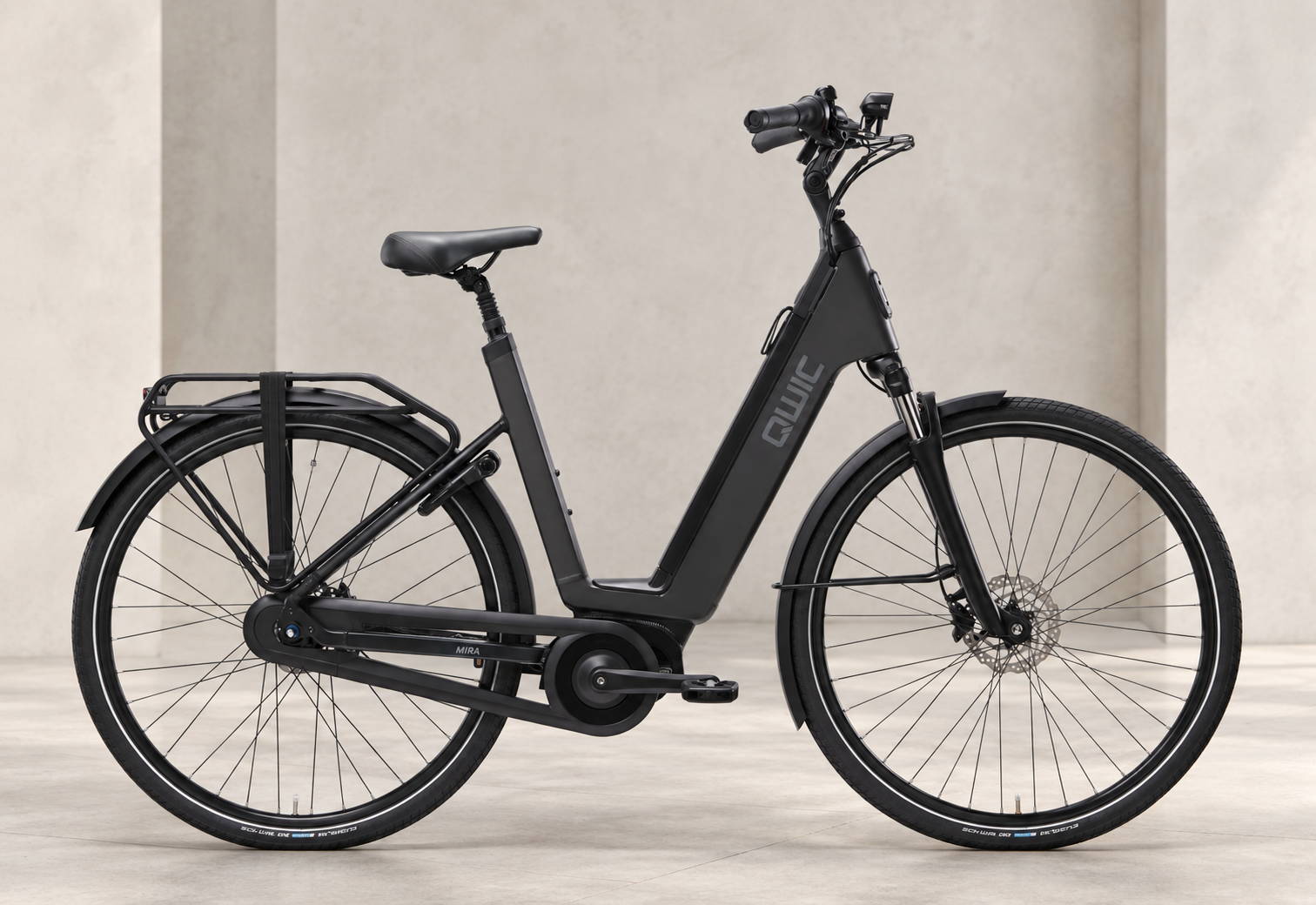
The QWIC Mira Daily is easy to understand at a glance: low-step frame, upright riding position, suspension fork, mid-drive motor, large battery, and hub with built-in gears. A city bike for the same commute every day, rain or shine.
Before buying a used one, there are two things you should keep in mind: its weight, and the fact that not all Mira Daily models are the same.

Jos Mans
Written by: Jos Mans | Published on: September 29, 2026 | 11-minute read
In a nutshell
- The Mira Daily is a comfortable bike with a mid-drive motor, suspension fork, and Nexus 7 hub—not a lightweight urban e-bike.
- Torque and battery capacity vary by model year. The current version is rated at 70 Nm and 756 Wh; older versions have lower ratings.
- Weighing about 26.7 kg without the battery, you can really feel its weight as soon as you lift it, maneuver it, or ride it without assistance.
- Are you buying a used model? Always check the nameplate, the battery, and the screen.
The Mira Daily by the Numbers
No experimentation, no design manifesto, no app to install before you can get started. The Mira Daily has sold in large numbers; its technology is commonplace, and its design is perfectly suited to everyday commutes.
The specifications below correspond to the current Dutch version provided by the manufacturer. When purchasing a used bike, always check the nameplate.
| Component | QWIC Mira Daily |
|---|---|
| Engine | Central engine |
| Couple | 70 Nm on the current version |
| Battery | 756 Wh, removable |
| Autonomy | Up to 130 km, according to the manufacturer |
| Speeds | Shimano Nexus 7, internal-gear hub |
| Support Levels | 5 |
| Fork | Suspended |
| Wheel size | 28 inches |
| Weight | Approximately 26.7 kg without the battery |
| Frame sizes | M, L, and XL |
| Step-over height | About 43 cm for the women's version |
Can't decide between M, L, and XL? First, read our guide on how to choose the right frame size for your electric bike.
What kind of bike is the Mira Daily?
The Mira Daily belongs to the category of comfortable city bikes, designed for commuting. It’s not a middle-of-the-road option or a compromise—it’s a conscious choice: stability, pedal assistance, and range take precedence over light weight and a sporty frame design. You sit upright, you can see above the traffic, and you’re riding a bike that stays on course, even on rough roads.
The mid-drive motor is the centerpiece. Located at the bottom bracket and responding to your own pedaling power, it makes it feel like you have more strength in your legs rather than being pushed from behind. You’ll really notice the difference on hills, when riding into the wind, and with a loaded rack. To fully understand this choice of motor type, read our comparison of mid-drive and rear-drive motors.
The Nexus 7 hub follows the same design philosophy. Seven gears are plenty for city riding and moderate terrain; you can shift gears while stopped at a red light, and the mechanism remains protected inside the hub instead of being exposed. For me, this is one of the most underrated advantages of a city bike: fewer adjustments, less dirt, and fewer parts that bend when the bike falls into a bike rack.
You’ll notice the practical difference most of all on your daily commutes. A bike that’s comfortable for the first five kilometers isn’t necessarily comfortable for the twenty-fifth. On the Mira Daily, the improvement comes from a combination of small details: the width of the tires, the frame geometry, the saddle height, and the way the motor gradually reduces its assistance as you approach 25 km/h.
The suspension fork and adjustable stem round out the package. With their wide “ tires ,” they absorb the impact of cobblestones, tram tracks, and speed bumps—which, on a stiffer city bike, would be felt directly in your wrists.
Electric city bikes for your daily commutes
E-bikes designed for commuting to work or running errands, inspected by professionals and backed by a 1-year warranty.
See the collectionWeight: The Real Topic of Discussion
About 26.7 kilograms without the battery. With the battery, the weight quickly exceeds thirty kilograms. This isn't a design flaw; it's the price you pay for the suspension, a sturdy frame, a large battery, and a full set of features. But it's the first thing to consider.
As long as the assist is working, you hardly notice it. The motor compensates for the bike’s weight, and once you’re moving, that weight actually makes the handling feel more stable. Everything changes as soon as the assist stops or you turn it off. Pedaling without the motor on a 30-kilogram bike isn’t a big deal on flat ground, but it does take some effort. The same goes for lifting it over a step, parking it in a narrow space, or turning around at low speed.
If you regularly have to carry your bike up a flight of stairs or lift it onto a two-tier bike rack, you're better off choosing a different model.
"For me, that's the only real limitation of the Mira Daily: not how it handles on the road, but all the logistics involved."
The advertised range of up to 130 kilometers deserves the same critical eye. This figure is achieved under ideal conditions: flat terrain, mild temperatures, low pedal assistance, and properly inflated tires . In practice, wind, temperature, terrain, and your own weight determine how far you’ll actually go. A larger battery gives you more leeway, but not necessarily more kilometers per level of pedal assistance.
Not all Mira Daily editions are created equal
This is where most used-car buyers get it wrong. The current Dutch product spec sheet lists 70 Nm and 756 Wh. Depending on the market and model year, you’ll also find models with 65 Nm and batteries starting at 522 Wh. So an ad for a “QWIC Mira Daily, 756 Wh” is worthless until someone has checked the nameplate.
The difference is far from superficial. Between 522 and 756 Wh, there’s about a 40 percent difference in range. Between 65 and 70 Nm, the difference is smaller than the numbers suggest, but the system’s settings can make it feel different. To understand what this number really means, read our explanation of motor torque on an e-bike. And when it comes to replacement batteries, it’s the system generation that matters: batteries are specific to the model and system and aren’t universally interchangeable.
In practice, the solution is to look at the bike itself rather than the text of the ad. The nameplate on the frame indicates the model year, the battery shows its capacity on the casing, and the display indicates which system is installed when you turn it on. Ask the seller for photos of these three items before you go to see the bike. It takes five minutes and saves you from judging a bike based on specifications from a different model year.
Added to this is the brand’s history. QWIC went bankrupt in late 2023 and relaunched in 2024. This doesn’t make a used QWIC an unreasonable choice, but after-sales service and the availability of parts are factors to consider in your purchasing decision. Be sure to ask who can read the system and whether a replacement battery is available. Our tips for buying a used e-bike cover this topic in more detail.
Buying refurbished Things to Check
When buying a used Mira Daily, there are three key questions to ask: What version is it? What condition is the battery in? And can the system still be maintained? The rest is just standard bike maintenance.
- Identify the battery model installed and request a measured capacity.
- Try out the five levels of assistance, including when starting from a stop and at low speeds.
- Pay attention to any jerks or interruptions in the power assistance. There should be none.
- Check the display, the lighting, the walking aid, and the original charger.
- Shift gears on the Nexus hub by slightly easing off the pressure on the pedals—never while under full load.
- Check the brakes, chain, sprockets, tires , and suspension fork.
A battery that shows as full on the screen but loses two bars during a test ride as soon as you demand power tells you more than any spec sheet ever could. To better interpret these signals, check out our article on the battery life of your e-bike.
In my opinion, the Mira Daily is actually a good candidate for refurbishment. It features standard components, is designed for everyday use, and the wear-and-tear parts that fail first on this type of bike—brakes, chain, and tires —can be replaced at a low cost. What you’re getting with a bike inspected by professionals is precisely the part you can’t evaluate yourself: a battery that ’s been checked and tested, backed by a one-year warranty.
Refurbished QWIC Electric Bikes
Check out the QWIC e-bikes, inspected by Upway and ready for their next owner.
View QWIC BikesConclusion: Who is the Mira Daily designed for?
The Mira Daily is a comfortable bike that does exactly what it was designed to do: it’s stable, offers reliable assistance, and has plenty of range for your daily commutes. The downside is its weight, which is especially noticeable once you get off the bike. If you’re buying a used one, inspect the bike itself—not just the ad description. The nameplate, battery, and display will tell you which version you’re looking at.
"The Mira Daily doesn't require the legs of an athlete, but rather a realistic assessment of what you'll need to do with the bike once you get off the saddle."
Frequently asked questions
What is the actual range of the QWIC Mira Daily?
Is the QWIC Mira Daily heavy?
What kind of battery does the Mira Daily have?
Can a QWIC still be repaired after bankruptcy?
Who is the Mira Daily intended for?
About the Author: Jos Mans
Jos is both a writer and a cyclist—and more often than not, he does both at the same time. With thousands of kilometers under his belt and just as many words on paper, he combines his two great passions: being on the road and telling stories.