
The best electric bikes for tall riders and heavy loads
You don't realize it when you're paying for it, but you feel it from the second week onwards. When your electric bike has to do the same thing every day—laptop, panniers, child seat, bridges, wind—the "maximum weight limit" is not a detail, but a limit: either you stay within it, or you slowly exceed it (and sometimes without even noticing). But you want to be able to trust your bike.
That's why I've compiled a list of the best electric bikes in the category for tall riders and heavy loads. Here are the top 5 if you're choosing based on weight and fit.
Written by: Jos Mans | January 28, 2025 | Reading time: 5minutes

About the author: Jos Mans
Jos is a writer and cyclist, most often both at the same time. With thousands of miles under his belt and just as many words on paper, he combines his two great passions: being on the move and telling stories.
Key findings
- "Best" here means: maximum gross vehicle weight rating (GVWR / system weight) and a truly suitable size (sizes/size ranges).
- In public specifications, 200 kg GVWR is the top of the range (Tern GSD S10 and Gazelle Cabby). Beyond that, we mainly enter niche and cargo categories.
- For trekking models (such as the Cube Kathmandu), check the version: some can carry up to 160 kg, while carbon versions may have a lower weight limit.
GVWR explained: what exactly does it mean?
- total weight (GVWR / system weight)
- the rider's weight (if listed separately)
Top 5: Highest limits in terms of weight + adjustment
1. Tern GSD S10
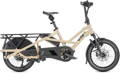
- Maximum gross vehicle weight (GVWR): 200 kg
- Maximum rider weight: 264 pounds
- Recommended height: 150–195 cm
- Why No. 1? 200 kg is the top of the public specs, and Tern is very clear about the adjustment. It's remarkably well documented.
2. Gazelle Cabby (C380)
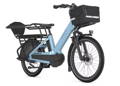
- Maximum total weight: 200 kg
- Why No. 2? The same 200 kg limit as Tern, but with a clear longtail/cargo focus.
- Perfect if carrying extra weight and a daily load are the norm. If you're looking for a "classic" trek, this may be too much cycling.
3. Riese & Müller Nevo4
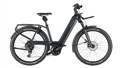
- Maximum gross vehicle weight (GVWR): 160 kg
- Maximum rider weight: 275 pounds
- Why No. 3? High limits without tipping over into the world of cargo bikes. The 125 kg rider weight is particularly high for a non-cargo e-bike.
4. Kalkhoff Entice 5 Season |2
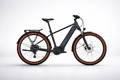
- Maximum system weight: 150 kg
- Sizes up to XXL
- Why number 4? If your main challenge is finding a large size that really fits, Kalkhoff is one of the most transparent mainstream brands, with XXL frames and precise specifications.
5. Cube Kathmandu Hybrid (EX/EXC/SLX/SLT)
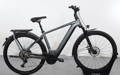
- Large frame sizes (up to at least 62 cm, sometimes more)
- Maximum system weight: often 160 kg for "classic" Kathmandu tents
- Please note: C:62 versions can go down to 135 kg.
- Why only No. 5? It's the "workhorse" trekking choice that you see everywhere, but you have to check the version. "Kathmandu" isn't enough; the variant is.
What the brochure doesn't say about the setting
Wheels and tires silent decision-makers
Fit isn't a luxury, it's control.
The load is a dynamic weight.
Practical shopping checklist
- Look for GVWR/system weight/permissible total weight. If this isn't specified, the bike isn't necessarily bad, but you lose the numerical certainty you're looking for.
- Check the rider weight if it is listed separately. If your weight is above (or very close to) the limit: don't go.
- Check the size/fit in person. Size range in cm? Perfect. Only frame sizes? Look at the largest size and geometry (reach/stack if you're familiar with it).
- Which model for which use? Heavy loads/children: Tern/Gazelle Cabby. Trekking/commuting with high limits without feeling like a cargo bike: Nevo4. Large size and desire for a "classic" e-bike: Kalkhoff XXL or Kathmandu large size (check the version required).
- Refurbished: where you can save money. Heavy/loaded driving puts strain on brakes, tires, and transmission. A refurbished vehicle is often a wise choice, as these wear points have already been checked or replaced.
My recommendation
- If carrying heavy loads is part of your daily routine and you want the highest limit, choose the Tern GSD S10 or the Gazelle Cabby. With a GVWR of 200 kg, these are top-of-the-line models designed for this purpose.
- If you want high limits without feeling like you're riding a cargo bike: the Riese & Müller Nevo4 offers the most convincing balance (high total weight + high cyclist limit).
- If you are particularly tall and want a size that really fits, go for the Kalkhoff Entice 5 Season |2 (XXL). This is often the most practical way to achieve a comfortable fit with a serious system weight.
- If you're looking for a well-known trekking bike with large sizes, the Cube Kathmandu Hybrid could be perfect, provided you choose the right version. Check the system weight for each variant, as the C:62 may be lower.