The best MTB in 2026

There are e-MTBs that feel like riding a motorcycle. And there are e-MTBs that mainly allow you to ride your MTB , as if someone had upgraded your legs (who would say no to that?!).


The four bikes below belong to this second category. Not because they are identical (quite the contrary), but because each one demonstrates in its own way what currently represents the cream of the crop: motor control, battery range, geometry adapted to speed, and suspension capable of handling the weight.


These four models are full-power e-MTBs. Want to know more? Keep reading!

Written by: Jos Mans | March 6, 2026 | Reading time: 5minutes

About the author: Jos Mans

Jos is a writer and cyclist, most often both at the same time. With thousands of miles under his belt and just as many words on paper, he combines his two great passions: being on the move and telling stories.
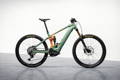
Orbea Wild

Key findings

  1. A large battery makes all the difference. Technical terrain consumes a lot of assistance: 800–840 Wh can make the difference between "one more lap" and "let's go home."
  2. An enduro setup is your ally. Stability + solid suspension make a full-power e-MTB truly usable (Rail+ / Wild).
  3. Fun is good. Predictable is faster. On difficult terrain, you want a bike that remains clear and stable (brakes/travel/geometry).

1. Trek Rail+ Gen 5 — diesel
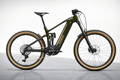
Trek Rail+ Gen 5

The Rail+ isn't a bike you fall in love with because it's charming. You fall in love with it because on the third day in the mountains, you realize: this thing really holds up.

The Rail+ is designed as a tool: Bosch platform, large battery (800 Wh), and a frame made to remain stable under the rider. You get that feeling of being "on rails," which actually makes you faster on technical terrain, not because you ride better, but because the bike panics less.
This is the bike you choose if you want certainty.

 Brake, aim for the trajectory, let go. That's it.

Rail+ is almost boring in its consistency, and that's precisely why it's so good.
The main drawback: it's not a bike that's easy to lift. But that's the price you pay for range + stability + robustness + a true enduro setup. And if you want to tackle technical terrain all day long, it's worth it.

If you're unsure, you can also compare the Trek with the Cube.

2. Orbea Wild — powerful downhill bike with endurance
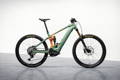
Orbea Wild

The Orbea Wild is a bike that loves descending even more than climbing.

This is the bike for you if you like challenges and fast lines. It uses a full-power Bosch motor with a choice of modular batteries (600/750 Wh). This makes it suitable for long rides.
This is not a bike for MTB tame" MTB riding.

 It's the bike you use to tackle a trail that's normally too rough... and you do it anyway.
And then again, because the battery allows it.

One minor drawback: on flat terrain such as in the Netherlands, this e-MTB can feel like riding a freeride bike to the bakery. It's possible, but you quickly realize that this beast wants rocks and real descents.

3. Specialized Turbo 4 — a brilliant e-MTB, sometimes too "perfect"
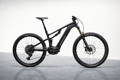
Specialized Turbo 4

The Specialized Levo 4 is technically impressive:105 Nm, 810 W, 840 Wh (in the Comp version) and a configuration that many consider to be the market benchmark.

Why isn't he number one?
Because for truly challenging terrain, it can sometimes seem almost too smart. The Levo is more elegant, more refined, more polished.

It's fantastic if you want a single bike that can do everything. It's a little more ATB than MTB. But if you're mainly looking for rough terrain, long rides, and challenging handling, Trek and Orbea's approach may be more appealing.

What I really think
The Levo is the bike that makes you believe you've become a better rider. Fantastic.

But it also comes with a higher price tag and is positioned as slightly more versatile than a pure MTB.

4. Canyon Spectral:ON — a lot of bike for your money (if you configure it right)
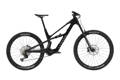
Canyon Spectral:ON

Canyon is often the rational choice: a lot of equipment for the price.
On paper, the 800 Wh battery life is very appealing.

My opinion? This is the bike you choose if you don't want to pay the "premium tax" of the big brands.

But with Canyon, you sometimes have to look closely at where savings have been made: wheels, brakes, or adjustments. If you find a good configuration (or a well-chosen refurbished model), you can get a lot of enjoyment for your budget.

But it's a little less "set-and-forget" than Trek.

Comparison table

Rank (according to your profile)ModelCharacterBatteryTravel (front/rear)Why do you want it?What must be accepted
#1Trek Rail+ Gen 5Stable, enduro tool800 WhEnduro orientationLong days + technical terrain + durabilityWeight / transport
#2Orbea WildAggressive, downhill stance600 / 750 Wh170 / 170 mmChallenging terrain, steep descentsOversized on flat ground
#3Specialized Turbo 4Refined, natural840 Wh6.3/5.9 inchesVersatility + high-end settingsPremium price + ecosystem
#4Canyon Spectral:ONGood value for money, playful800 WhTrail / enduroA lot of bike for the priceSpecifications vary depending on version

FAQ

What is the actual range of an e-MTB on technical terrain?

Approximately: 30–60 km if you climb a lot and use a lot of assistance. 50–90 km if you ride more moderately in Eco/Trail mode.

On very steep and technical terrain, it can be even less.

Large batteries (800–840 Wh) have one main advantage: you don't need to constantly worry about battery life.

Which parts wear out the fastest on an e-MTB (and what should you check when buying refurbished)?

The classics:chain + cassette + chainring,brake pads and discs (weight + speed)
On a refurbished bike, also check:the pivot points/bearings on the frameif the fork and shock absorber have been recently serviced.

What improvements are really worth it for long rides and difficult terrain?

  • Brakes (4-piston calipers + good pads + sufficiently large discs)
  • tires solid carcass + suitable rubber)
  • Wheels (more robust and rigid)

Do you still have questions?

Contact us by email: support@upway.shop